Guest post by author Ian Barr on the key difference between retellings and reimaginings.
What if King Lear was told from the perspective of the fool? What if there was a zombie apocalypse during the events of Pride & Prejudice? What if The Odyssey took place during the Great Depression in the American south? What if, what if, what if!
Retellings and reimaginings of classic tales have seen a resurgence in recent years, with beloved plots retold in fresh settings or favourite characters given a new light. Whether you’re retelling or reimagining, all these stories revolve around the age-old question: “What if?” And while the two types of stories are related, there are some key differences between retellings and reimagining that are worth discussing.
What is a retelling?
Retellings are the more straightforward of the two, as they tend to follow the original plot of whichever work is being retold more closely. You’ll find similar beats, themes, and roles incorporated from the source material, while elements such as tone, setting, and the characters can be drastically different. And that’s the simplistic elegance of retellings: the “fill in the blanks” style of plot outlining allows for maximum focus on worldbuilding and character design.
For example, my forthcoming novel Carnage (available this September) is a retelling of Romeo & Juliet. You’ll find similar themes of forbidden lust, conflict between desire and expectation, and the connection between love and violence, but the similarities end there. Set in a dystopian wasteland where militarised factions battle in televised games of vehicular warfare, it follows the whirlwind affair of two competitors on opposing teams. All the politics and meddling of the source material are present in a new form, but with a case of entirely original characters acting out the scenes. The shape of R&J’s plot may lend itself to ‘Carnage’ but it is decidedly not the same bittersweet Shakespearean tragedy that has inspired countless other love stories for centuries.
And that familiarity is the real beauty of a retelling. The stories that inspire retellings have already proven to resonate with readers, so as long as your worldbuilding and characters work is up to snuff, there’s no reason why your own story won’t accomplish the same.
And while they are related, reimaginings are a horse of a different colour.
What is a reimagining?
Reimagined stories also begin with a classic tale, using previously established characters and settings but twisting them into something new. Recognizable elements will still be present in these stories, but with fresh perspectives. Why reimaginings are related to retellings is that they also lend the familiarity of the source material to the reader that allows the writer to focus on whatever new twist they’re trying to employ. As to what that twist is? The possibilities are virtually endless.
A villain could be cast in a new light, inspiring sympathy and understanding to their later plight. Or the true story of a valiant hero will be exposed, with all the dark details left out of the songs sung about their allegedly great deeds. Maybe a minor tertiary character is given their moment in the spotlight and a chance to tell the story that was overshadowed by the original tale. Or perhaps you just have an idea for an alternate history!
One of my favourite examples of a reimagining is Lamb by Christopher Moore, which is an account of Christ’s activities in his early life as told by his childhood best friend, Biff. This humorous reimagining uses all the familiar faces and places from the New Testament, bringing a bit of humanity and humility to Christ as Lamb fills in the blanks during the missing years from the Bible, where he learned how to be the Son of God before his eventual sacrifice in his thirties. Yes, it’s a comedy (though surprisingly heartfelt), but it balances itself out with enough Christian theology that the twist of the Messiah being presented as a real, flawed individual doesn’t necessarily challenge any religious dogma. It’s really well done.
And that’s… more or less all I have to say on retellings and reimaginings. If you need a recap, I suppose they can be summed up in fairly simple terms.
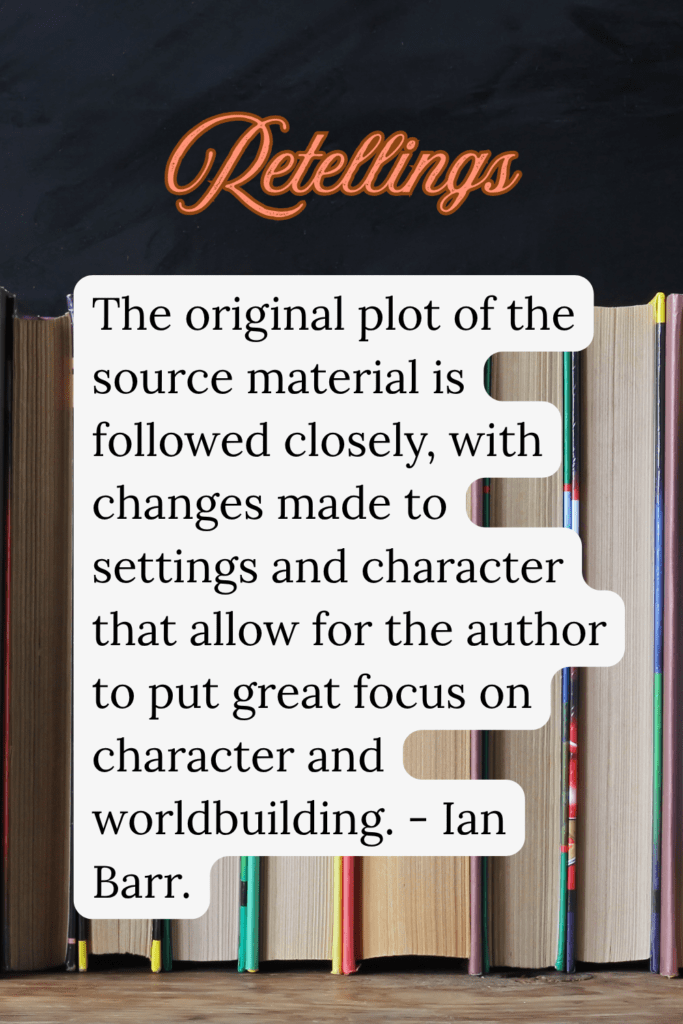
Retellings: The original plot of the source material is followed closely, with changes made to settings and character that allow for the author to put great focus on character and worldbuilding.
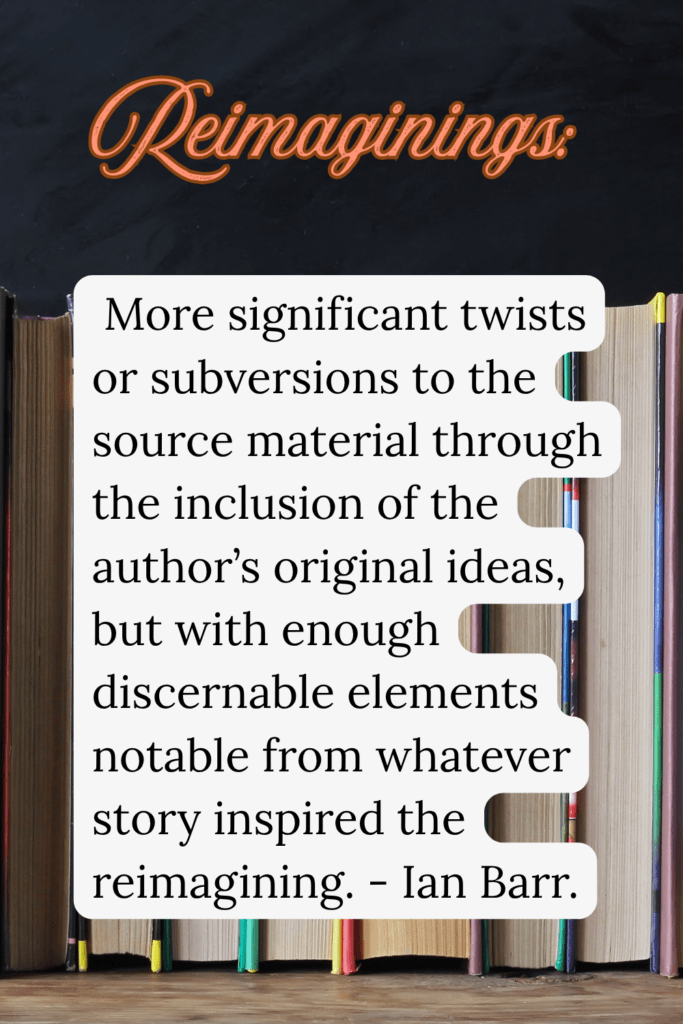
Reimaginings: More significant twists or subversions to the source material through the inclusion of the author’s original ideas, but with enough discernable elements notable from whatever story inspired the reimagining.
But really, it’s kind of all fanfiction anyway.
Ian Barr is the author of speculative fiction titles including Synthetic Magic and Carnage! You can find his reviews, ramblings and original speculative fiction on his Substack, The Word Dump.

Gothic horror | Otherworldly Mysteries You Can't Put Down
Leave a Reply