Why Liverpool?
Liverpool is my home city and I know it like the back of my hand. I could never get lost here. I’ll be honest, sometimes I’ve felt like I’m not living as exciting a life as other people because I’ve never left here (or desired to leave.) I also feel that when you have lived somewhere your whole life, you have a tendency to take it for granted.
A decade or so ago, I thought I’d look into my family history on Ancestry.com. After seeing what colourful family histories people on Who Do You Think You Are? had, I thought I’d find something quirky. I didn’t. I went back 200 years and apart from arrivals from Tipperary and Hamburg (Hamburg was just one guy tbh), my ancestors were very much from here. My paternal great-grandparents came over from Kilkenny so the Ireland-Liverpool connection was predictable and still going strong into the 1930s.
As it stands today, it’s estimated that the city’s population are 85% Irish descent thanks to the Great Famine in the 1840s. Most of the Irish people who settled here had no other choice. Those who had enough money to, sailed on to America. Those who settled here relied on casual, unskilled labour and as a result, had to take up residence in the tenements near the docks, a lot of them working as dockers. My maternal great-grandfather was still working as a docker into the 1970s.
Over the years, I’ve learned to love that. I find it baffling that my maternal grandmother started her life in the same riverside slum as her parents did and their family had been there since the Irish migration of the 1840s. Those slums don’t exist any more, but most of Victorian Liverpool still remains.
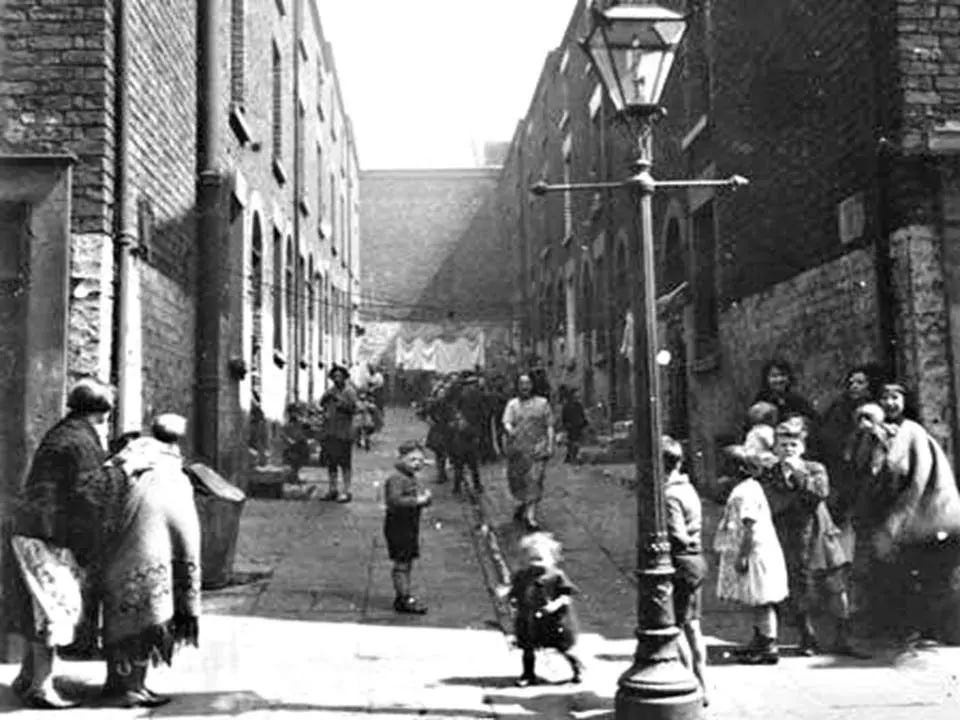
Anyway— I digress. It just had to be Liverpool. Modern horror stories in books and on screen are set in Victorian England, circulating around London (Ripper street, Whitechapel, Penny Dreadful etc) or isolated mansions in fictional villages and towns modelled on the home counties of southern England. While the classics explore the South West (Hardy) and industrial towns and cities in the midlands and the north (Bennett, Gaskell, Bronte, Eliot), there are still lots of stories to tell in Liverpool!
Victorians did write about Liverpool. It was the country’s second largest port, and fastest-growing city.
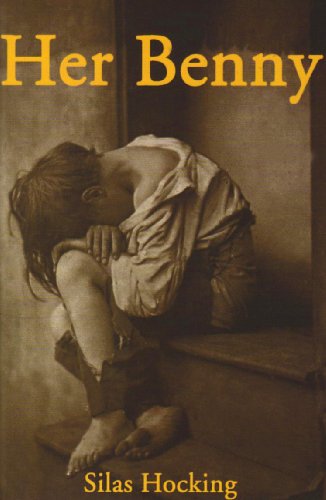
It’s worth mentioning a novel that inspired me to look closer: Silas Hocking’s Her Benny. Hocking was a missionary who had been inspired to write the story when he had seen what life was like for poor people in Liverpool at the height of the industrial revolution.
Hocking was a Methodist minister and published this novel in 1879 after it initially ran as a serial. His work with the poor of Liverpool inspired him to write a story that would generate deeper understanding and sympathy from the public and those in power (as well as a bit of promotion for his Methodist ideology, but hey, it was his book).
my pastoral work, during a three years’ residence in Liverpool, called me frequently into some of the poorest neighbourhoods of that town, where I became acquainted with some of the originals of this story … the grouping of the characters is purely fictitious, but not the characters themselves…. Some of them are alive today, others have gone to their rest…. [If my story] shall awaken any sympathy for the poor little waifs of our streets, I shall have my reward. – Hocking
Other writers who came to Liverpool.
Dickens visited here in 1838 and 1842. He even accompanied a constable on a patrol of the streets. Dickens remarked that Liverpool was only ‘second in his heart’ after London, staying at the Adelphi Hotel before his tours to America. Most people would sail to America and the rest of the new world from Liverpool. You might even spot fictional characters travelling there in classic novels like The Beetle and Lady Audley’s Secret.
Did you know that Herman Melville came to Liverpool? He described its peculiarities in his book Redburn. Visiting the wealthier and poorer areas of the city, he found it a world away from New York:
In Liverpool indeed the negro steps with a prouder pace, and lifts his head like a man; for here, no such exaggerated feeling exists in respect to him, as in America. Three or four times, I encountered our black steward, dressed very handsomely, and walking arm in arm with a good-looking English woman. In New York, such a couple would have been mobbed in three minutes; and the steward would have been lucky to escape with whole limbs. Owing to the friendly reception extended to them, and the unwonted immunities they enjoy in Liverpool, the black cooks and stewards of American ships are very much attached to the place and like to make voyages to it.’ Melville, 1849.
Liverpool officially recognised as a city in 1880.
It’s only the city that it is now because it became the first commercial wet dock in the UK and was officially recognised a city in 1880. Huge things happened here in the 19th century. This place couldn’t be more Victorian if it tried.
If you look around the Georgian Quarter, Duke Street and Parliament street today, you’ll see the first hallmarks of the gentrification of Liverpool. People flocked from all over the country to establish business and homes there. It was a time of incredible economic growth, prosperity and opportunity.

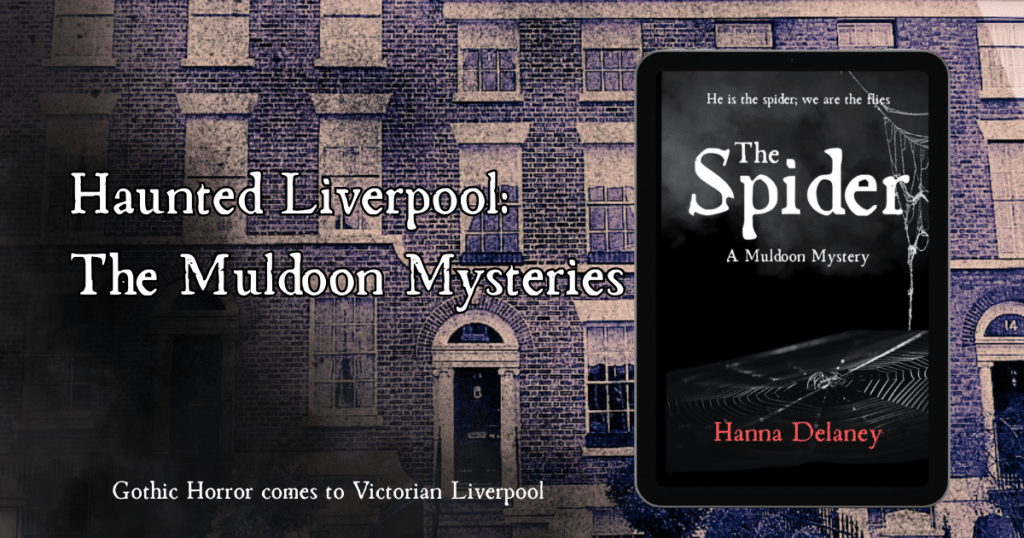
So there you have it… That’s why in The Spider, Frances Bryant moves from the older village of West Derby into the more affluent eastern part of the city, now known as The Georgian Quarter. It was the place to be if you were new money.
The Spider and the significance of setting.
Too many Victorian stories or books set in Victorian Britain are from an upper-class perspective. A quick rummage on Amazon will show you several Sherlock retellings, continuations or even new stories set in Mayfair and Kensington. It’s 1865: Lady Hiccup Tablecloth Doily and Lord Hot Rod Twinkle are solving a murder, or a case of mistaken identity, or some other sort of mystery involving lords, ladies, Army Officers or even royalty. If they do venture into the poverty-stricken alleys of London, it’s like Dick Van Dyke cloned himself.
I wanted to do something different, and write characters based on real people, in a real setting, but with a supernatural edge to it. What if the dark streets and abandoned warehouses were actually a great place for the monsters to hide? What if a busy city is actually the perfect place for creatures to hide in plain sight?
We’re quite superstitious in Liverpool, and we love a good ghost story. It’s the perfect place to set a Gothic mystery series.
Daniel Muldoon is an occult detective with a painful history.
Muldoon is first introduced in the series as a reluctant detective. It was never his job, but we aren’t told why. All we know is that Police Chief Inspector Andrew Gill can’t do without him:
‘Yes, Mulders. Weird shit. You deal with weird shit, and there’s been a lot of it knocking around. I can’t afford to let you go just yet.’ The Spider.
We know that he’s Catholic (the main religion and still the one most of Liverpool culturally identify with), he’s Irish, and he usually deals with demonic activity, not ghosts. He thinks that paranormal investigations are beneath him. He thinks that ghosts are ‘harmless, Who’s ever been killed by a ghost?’ But all that is about to change when he visits 5 Percy Street, the home of Frances Bryant.
He’s the perfect character for the job. Join him as he assists the Liverpool City Police with their strangest cases.
Leave a Reply