Serialisation (if you’re reading from the US, don’t worry, I’m just English) is a topic that gets discussed quite often in the online writing world. Does anyone serialise their work? will pop up on a reddit thread. Is it worth running a serial of your book to find readers? comes up in conversation all the time in social spaces. I aim to address as many of your questions as possible.
Does it work? That depends on what you’re wanting it to do.
I started serialising my debut novel Oceanus in 2024 on Substack. At the time, this was the best thing to do in my case. I had just started writing fiction ‘properly’, I’d just changed careers, and I had:
- No following for my fiction.
- Not much of an online presence.
- Limited ways of proving I could write before asking people to buy my book.
- I struggled to finish a book in private.
Why running a serial on Substack worked for me in 2024:
I could write with a live audience. This is a great way of getting direct feedback on your writing. It was also a case of learning-on-the-job: which length episodes worked better than others? Sharing 1000 word instalments might be better than sharing 3000 word instalments if you want people to check in every week, for example. Substack is really easy to set up. You don’t need any coding experience or a high-tech background. You can just write something and publish it.
Time pressure of serials vs whittling away in private.
If you’re writing as you go (like I did) the time pressure to get the next episode out can help you focus on what’s important. Do we need a long, windy chapter about the colour of the trees, or can we skip some of this and get to the action? Having a time limit helps you sprint and get the important bits down. When you don’t have time, you have to be brutal with what’s going in and what’s being left out.
When you know there are (even just one person tbh) people waiting to read the next episode, you do not want to let them down. Serials are a great way of keeping to a deadline and finishing a book. I finished 3 novels thanks to this process!
Hooking readers. Serials are a masterclass in leaving people wanting more.
You have to find a way to hook readers, and make them want to find out more. This is really challenging, but that will eventually become what keeps your readers turning the pages when they buy a book. Leave them on a cliffhanger, build the tension and say ‘tune in next week.’ You will really look at what you’ve written and be able to think ‘does this keep them wanting more, or has the story gone off the boil?’. I published shorter chapters than I would have in the book, because 1-2k words is more effective at holding a serial reader’s attention than 3-4k. The larger word count works better when they’re sitting with the physical book or their e-reader. They’re probably reading your online serial in their phone’s email inbox, or on a desktop with a million tabs open. There is much more competition for a reader’s attention when they’re not holding a book.
Running a serial is a try before you buy for new, unknown authors.
When I started out, half the people I told didn’t even know I could write. I’d built a following for my craft business and those followers weren’t necessarily readers, or even interested in what I wrote. I had to start with the assumption that nobody gave a shit and I was starting from scratch.
This was an invaluable way of bringing my work out into the online world and letting people sample me, essentially. Rather than running free book promos on Kindle for years to snag readers, I could show readers there and then that the work was worth picking up and reading.
Your serial can’t be a rough draft. There has to be some care given.
Your serial doesn’t have to be your best work but it should be a pretty good draft. Not the first draft! Something that is nearly the final thing, if not the final thing. A lot of authors will run a serial before going through the editing process, but if you know spelling and grammar is a particular weak point of yours, you might consider going through edits and proofs before posting the serial. First impressions count more than anything else, and you want to hook that curious stranger, so make sure it’s presentable.
Serials are great for community building.
The writing community are the people who will not let you quit when the doubt comes for you. Find them. Nurture them. Be a team player. If they like what you post, have a look at their work. You might enjoy what they put out, too.
Community building: I wasn’t the only author on substack serialising my work. Substack provides a free-to-use platform to get your work published, and you can also read a range of fiction from other authors doing the same thing, most of them posting for free. There were also a lot of writing contests to take part in, which was fun! They were free to enter and the prize would range from something monetary (a paid subscription or an amazon voucher) to promotion for your work (a special mention or a feature on the host’s publication). These were fun and you learn so much.
Readers find you for your writing, not your social media popularity. By all means, share your work with friends, family and followers, but Substack was a great way to find an audience. They stumble across your work, like what they read, and they join your mailing list to read more!
Your serial can become a book, if you want it to be. It could have been a book first.
I’ve seen authors who already have a few books under their belt come to Substack to promote their work by serialising one of their older titles. This can work as free publicity and a ‘soft launch’ for your novel. However, what you have to bear in mind is it’s not going to suddenly make you a substack bestseller. It does have other benefits, however.
Serials remain an excellent way to market yourself and your writing, especially if you have no online presence as an author. I stand by this, even if it doesn’t work for me any more.
Serials don’t necessarily make great books, so do take the time to re-calibrate your chapter lengths or content, develop characters more or throw in a bonus scene. You can slow down the pace for a final book if you want. It’s all up to you, at the end of the day. The serial can be book-lite, with the finished product being slightly different. Now that you have that reader feedback, you can make any major edits too, if you like. Either way, you have something to work with now that you’ve completed a serial.
Why Substack serialisation doesn’t work for me as an author any more.
As I’ve progressed in my author career, serials have become quite cumbersome and difficult for me to fit in between writing other books, marketing older books and marketing upcoming books! The time it takes to run your serial coould be spent writing behind-the-scenes stuff, a newsletter, a blog post… or even a book.
I’m a full time author. Now that this is a business I’m running, I have to:
- Maintain a social media presence (it sells books and also brings new subscribers to my newsletter).
- Market the books I’ve already written.
- Market the books I’m writing now!
- Remember to send newsletters.
- Blog (I love blogging, but it does take up some time).
I can’t also run a serial. It makes no sense as a business decision. Here’s why:
Low earnings.
Although some readers may want to take out a paid subscription or leave you a tip, you will not earn any significant income from writing a serial. The climate just isn’t set up for that. It doesn’t have the same layout as Royal Road or Wattpad.
Paywalling your serial isn’t a good idea.
Serials are great marketing, but you’re not marketing to many people if you’ve hidden your work behind a paywall. In my experience, people have wanted to financially support me because that’s what they want to do, not because I made things private access only. Remember what I said about relying on free book promos? Hiding your work behind something isn’t going to help if you’re trying to gain exposure.
The best paywalled content is expert marketing tips, or some other thing that solves a problem for people. All my stories solve are bouts of boredom, but I don’t want to start promising anything more than that. I just want to write books. If I was a cook sharing bonus recipes, or a filmmaker sharing bonus material (and I was already famous) I’d imagine it wouldn’t be hard to earn from that. For me though, free is the way to be. The only paid thing is the book.
The heyday of the serial: long gone.
When authors such as Dickens (who even ran his own paper for this), Dumas, Hugo, Beecher-Stowe and Rice-Burroughs were writing serialised novels: the masses were reading newspapers and magazines, and those writers were paid per episode for their work. In the 19th and early 20th century, books were incredibly expensive, so working class and middle class readers would read serials in newspapers and magazines instead. It was cheaper, and they could look forward to the next episode as they picked up the paper on the way to work.
The world is different now. While the invention of the internet and social media has made most things more accessible, it has also had a hand in the deterioration of the attention span, reading comprehension and reading for pleasure. People don’t buy magazines and papers in the amounts they used to, and there is more competition than ever for authors to win some visibility for their work.
The way Substack is set up benefits non-fiction and journalism. Taking out a paid subscription is also the norm now: we live in a subscription-based economy. So if the people reading your work also have subscriptions to 300 other substacks, 3 of them paid, they’re probably not going to pay to read your fiction when they already have Kindle Unlimited, Netflix, Now TV and God knows how many other subscriptions that give them a surprise every month.
For me, by the time I got to my fourth novel and ran it as a serial, it was an awful lot of work for very little return. My open rate started to decline, my paid subscriptions decreased, and making sure all the chapters linked up properly was not very easy to do on a platform that was not set up for serial fiction. When you’re weighing up the other things you do to earn money, you have to cut your losses when it comes to effort vs income. I also missed writing short stories! So I’ll be doing that again.
So does a serial on substack work at all?
Yes! You can serialise short works (a novellette or a novella) and not lose your sanity. These are usually 3-12 episodes and as it’s a shorter period of time, readers will return week on week. This is also a fun way to try something new. if you usually write horror, but wanted to have a go at a dark fairy tale, the serial is a great way to test the water with your readers.
Do you have any other questions about running serials on Substack?
I’ll answer your comments if I can.
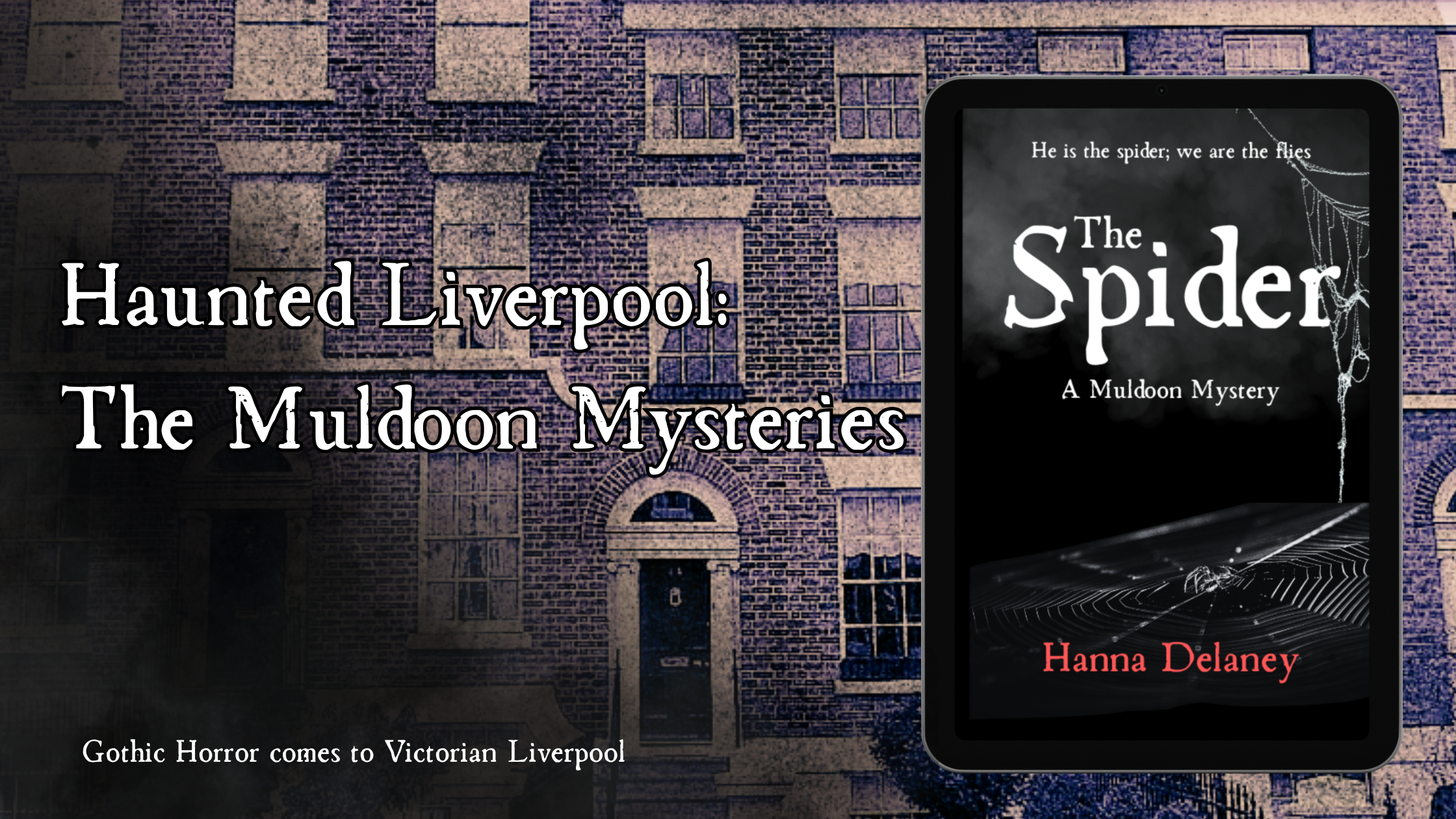
Hanna Delaney is a horror, sci fi and fantasy author from Liverpool, UK. She is known for her occult detective thriller series Muldoon, as well as her debut novel Oceanus, a sci-fi reimagining of The Tempest.
-
Authors are serialising their fiction on Substack. Does it work?
The truth about running a serial novel on Substack. Does it work? Breakdown of the pros and cons of seralising your fiction on Substack.
Leave a Reply