Publishing a book? Here are six things nobody told me about releasing a book. This may not be your experience when the time comes, but this is my experience, and this is definitely what I wish I’d known beforehand.
1.The anticlimax will really mess with you. The book is out. Now what?
Preparing a book for release, marketing it all over your socials and talking about it for months on end can really take its toll on you. Publishing a book was the main goal. You looked forward to this day for such a long time, and now it’s over. On the day after the release, you may feel deflated, you may feel like you have to stare at a wall for a few days, you may also feel like you’ll never be able to do that again.
This is really normal. You’ve just put 100% of your energy and efforts into getting your book out there. You really care about it, so of course it’s going to feel strange when suddenly, the anticipation is over.
What I do to get through this: Schedule some social media posts/newsletters for a week or two and take a break. I find that doing things like playing computer games (something really satisfying like Two Point Hospital) can help me recharge the batteries. It’s going to be a few days before anyone receives their book anyway, so you don’t need to be stalking your socials to see what’s happening.
You’ve just done an amazing thing. Through your life you will meet people who have ‘always wanted to write a book’ but the reality is that 3% of people who set out to write a novel actually finish one. That’s amazing! Give yourself a pat on the back and enjoy the achievement.
2. You’ll want to check your sales dashboard every minute of every hour.
This is something self-published authors and authors with small presses are plagued with: daily checks of the dashboard. You wake up every morning wondering how many copies have I sold overnight? When you’re watching the pot boil, nothing will happen. My sales aren’t exactly in the hundreds each month but I can tell you that checking once or twice a month compared with several times a day can make you see that you’re selling books.
As a new author, you can find yourself becoming obsessed with the sales data. Data is important for tracking where sales come from, or where in the world your audience is but it is pointless checking on amazon KDP or an aggregator like D2D. This is simply because they do not share that data with you. If you are using your own website to sell books, this might be useful to you, but for everyone else, it can ruin your day if you do it often enough.
A trap you shouldn’t fall into: I see some authors complain on social media that someone said ‘I’ve bought your book’ and then the number doesn’t change on their KDP dashboard. Please don’t do this. They might have ordered a paperback, and it will take a few days to show as sold (they don’t mark the sale until it has shipped) and they could have ordered it from another store. What I’m trying to say is don’t create this persona on Threads of you actively hunting down potential liars. It will scare prospective readers away.
What about when I’m not selling books? I shared the link with family and friends.
Again, this is quite normal. I know that people say ‘we should all support each other’ and so on, but do you want people to just buy your book and never, ever read it? Aiming your marketing efforts at friends, family and work colleagues is a great way to get an initial flurry of pre-orders or sales, but you can’t rely on this as a method for future books. Seeing the numbers on the dashboard might be disappointing, and you might see that family haven’t rushed out to buy it.
Your friends and family are not your ideal audience. They might buy a copy to show support, but they’re not necessarily going to read, and they’re definitely not going to review a book they haven’t read.
If you haven’t published yet: From the beginning, aim your content at a wider audience. Do not just tell friends and family and never mention it on social media. Use channels like Instagram and Tiktok to start talking about your book. Use Pinterest to start creating mood boards and share your blog posts to drive traffic to your site or shop. This is much, much harder than pitching your book to everyone you know, but at least the people following you now are following because your book sounds interesting.
If you have already published: It’s not too late to change your ways. You could start a Tiktok account tomorrow and start posting about your debut (even if it came out two years ago) as if it’s a brand new book. It’s brand new to this audience, so go for it.
3. You’ll beg for reviews. No one is going to buy a book that has no reviews, right?
I originally believed the latter. I believed that all of my book marketing had to be centred on the reviews and feedback the book received. This isn’t actually the case.
I’ve sold over 600 books (I am writing this in June 2026) since September 2024 and most of those sales were from:
- Serializing the book on Substack.
- Using hooks to talk about my book.
- Making interesting reels and carousels about my book.
- Basically telling the blurb of my book… spread over several slides.
- Showing people the cover reveal and excerpts.
People were much more interested in content like this than when I posted The things everyone is saying about my book. I suppose that at a glance, that doesn’t tell a cold audience what my book is about, and those reviews could just be friends and family hyping me up (contrary to what I said just before, this does sometimes happen). It doesn’t tell them if this is a book worth reading… yet.
Reviews are social proof. I am not denying that. However, reviews are the social proof that comes after the reader has already decided they’re interested. If they then go to check the book out on goodreads and it has a healthy mix of reviews, that might make them consider the next step: reading it themselves.
Something to remember about reviews:
Even the most anticipated bestsellers will not have a review count that matches the sales volume. As I said before, I’ve sold over 600 books and I have not had anywhere near 100 reviews for one title. These things take time.
So how do I get reviews?
- Remind people politely.
- Add a note in your next newsletter with a link to goodreads or storygraph.
- Make a post asking for reviews on your Instagram.
Sorry, there’s no easier way to do it. You can’t force people to leave reviews. You could find ARC readers (advance review copy) to read and review your book before and during the launch window, but ARC readers are volunteers and the rate of people who actually leave a review vs the amount of ARCs you give out is low.
4. There is still a lot of snobbery towards self-publishing a book and as I’ve discovered… sexism towards female authors.
I wish I could say this is an exaggeration. You’ll see it online, on substack, on Facebook… the insinuation that female authors only write smut. Male authors will proudly show off their ‘currently reading’ lists full of books by… other male authors. Then there’s another issue: a lot of your peers will be indie authors themselves, but they’ll only ever be reading traditionally published books. The indie fiction community can be wonderful and supportive, but even circles can have a dark side.
Note: There will also be so many amazing fellow authors who do enjoy your work and want to scream from the rooftops about how great it is regardless of gender, but for some reason you will fixate on the peers who think you’re lame. I don’t know why this is, but it must be the same logic as getting hundreds of good reviews only to then fixate on the 1 star review that says you are a terrible writer.
I’ve had things said to me that reduce what I’ve written to ‘Gothic Vampire smut’ or ‘Zombie r*pe fantasy.’ I’ve never written anything marginally like that, but I’m a female author on the internet so my work must be less than. It can’t possibly be a real work of literature. These are just the more explicit critics.
It may take a while to be seen as worth it in the communities that you are part of. That day may never come. You will be shocked at how many people have lofty opinions on the ‘low quality’ of self-published books while they hold out for validation from a traditional publisher. Other authors will use aliases in order to leave you a really low rating on goodreads, or you’ll see someone really banging on about how self-published (not that there are any errors, just that it is self-published and they hate how much they enjoyed it) your book is in their reviews.
It can really make you feel like Eddie the Eagle at the Olympics.
A post will come up on Threads and it’ll say ‘no self-pub please’. All of this is eye-opening and while there’s nothing you can do about people and their sometimes baseless opinions, you can focus on the things you can control.
It’s a circus out there, but you don’t have to work there and you don’t have to feed the monkeys.
5. Bookshops won’t want your book. Not without a bit of work, at least.
If you were under the impression that ‘indie bookshop’ means ‘stocks indie books’ like so many authors on Threads are, I must tell you now that you’re wrong. Sorry. Independent bookshops are very important in a climate where the titan that is Amazon pushes the high street into its colossal shadow, but they don’t owe you anything.
Some of my American contemporaries are very lucky to live in small towns where there’s one or two indie bookshops and they support local authors, but if you live in Broken Britain like me, you’ll know that there is limited shelf space, and the queue is huge.
So what do you do? You create a relationship with your local bookshop. I don’t have one where I live but I know of other authors who do, and those shops are happy to have the author come in and do meet and greets, Q&As and stock books on consignment (you bring the stock). Ask what can you do for them? Not what can they do for me? It’s really hard to shift books in this economy. Make it worth their while.
Bigger chains like Waterstones might be interested in stocking your book, but you have to speak to the store manager and make sure the book can be ordered through their system (note: if you use D2D your books probably won’t be ordered because bookshops can’t return them). This is the same for Barnes and Noble in the US. Nothing is a given.
This works the same for libraries. Libraries also don’t owe you anything. Your local library might have a really tight budget, and they can’t order niche books. See what you can do to help the library generate interest in your book: do an author event, a Q&A, an interesting talk… do something! Many libraries will love to support local authors, but you need to be visible.
Don’t be disheartened.
Again, focus on the things you can control. Focus on your online marketing, your fostered online community, your local book club, your social media followers and of course, your newsletter.
6. Writing the book was the easy part. Publishing a book was hard, but now comes the real work.
I think this is the biggest shock when it comes to publishing a book. Even authors who get traditional book deals can be surprised at how much of their own author marketing has to go into the book.
If I could grab every aspiring author now and tell them one thing, it’s that they should start marketing the book before they’ve even finished it.
You’ll be marketing this book for the rest of your career. It’s a good job you love what you do, isn’t it?
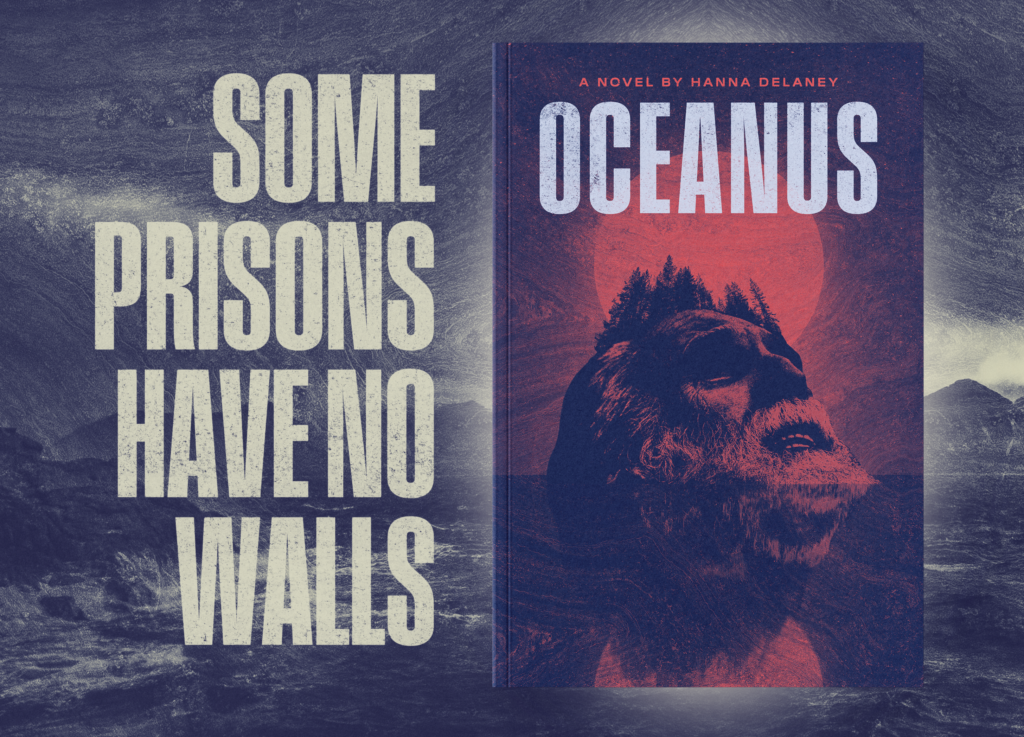

About me: I’m Hanna. I released my debut novel Oceanus in September 2024 after months of serialising it on Substack for free. This science fiction thriller sold over 100 copies in its first month. Not bad for someone who had a marketing budget of £0 and no agent or publisher. Since then, Oceanus has had a second edition published with Tiny Worlds Publishing and I’ve gone on to publish four books, two of which are Gothic thrillers set in Victorian Liverpool. I write speculative fiction mostly, focusing on thrillers and mysteries that traverse several genres.


Leave a Reply