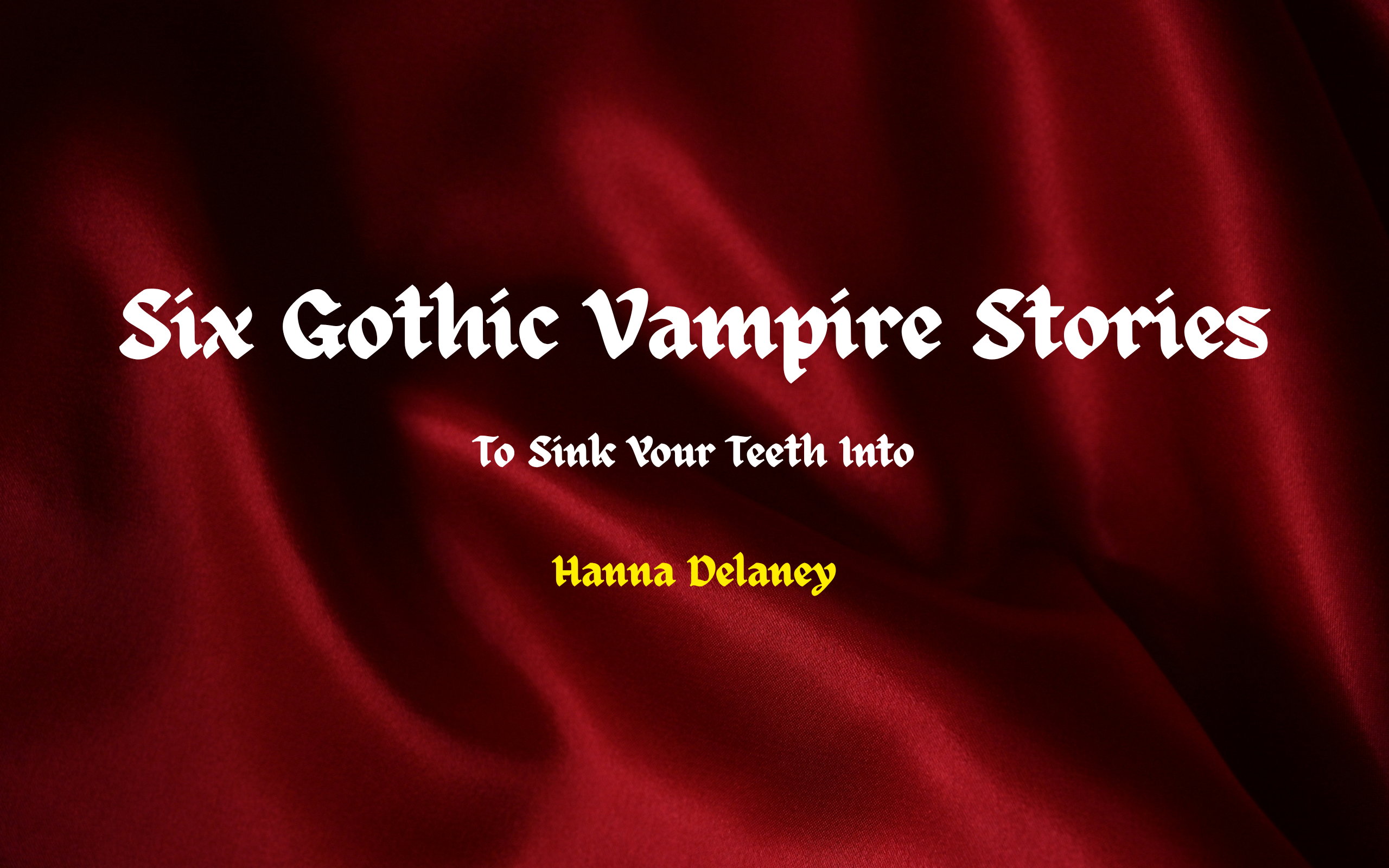
Vampires are all the rage and have been for centuries, but have you read any of these Gothic vampire stories? While there are countless Gothic vampire stories we could talk about, I wanted to highlight these for their impact on readers over the centuries.
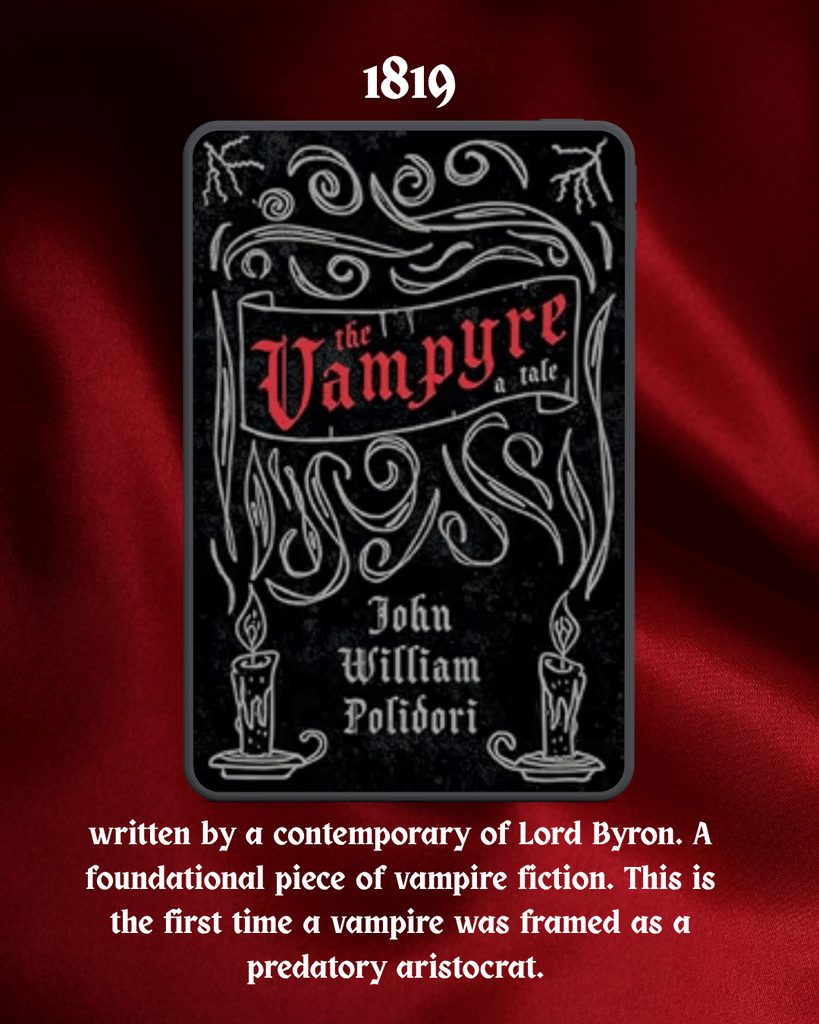
The Vampyre, John William Polidori, 1819.
John William Polidori was Lord Byron’s personal doctor, and he accompanied Byron across Europe. Polidori met with Byron’s contemporaries in Switzerland such as Mary Shelley and Percy Bysshe Shelley. he had unique insight into Byron’s world and when his story The Vampyre was first published, it was mistakenly credited as Byron’s work. It was Polidori’s and this is the first time we saw a modern vampire story that portrays the undead creature as a predatory aristocrat. This story really opened my eyes to just how influential this work was when it came to vampire fiction and vampires in modern popular culture.
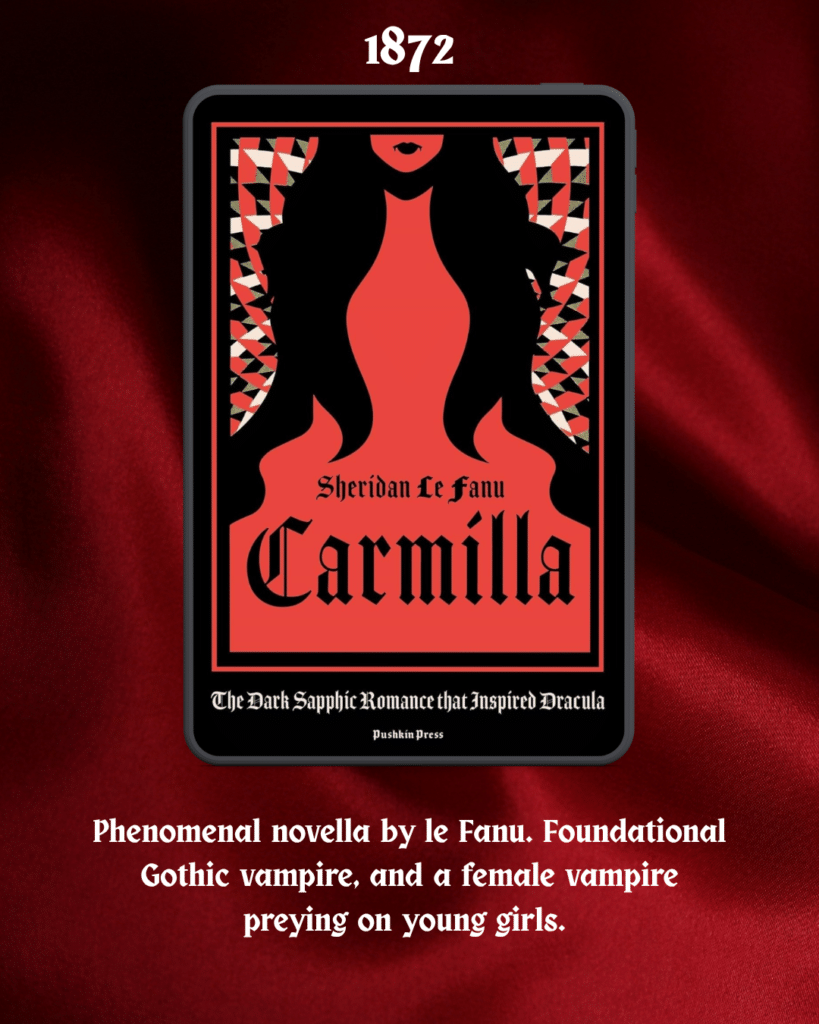
Carmilla, Joseph Sherican le Fanu, 1872.
This is my favourite of all the 19th century vampire stories. It is chilling, before it’s time and I loved it so much I wrote an essay on it. Le Fanu was actually a contemporary of Bram Stoker and this book was published over twenty years before Stoker’s classic. I’ve grown to become a fan of le Fanu and love his Gothic, brooding atmosphere and monstrous villains. Something amazing about Carmilla was the female monster: this was published during the Victorian era when a lady was inherently good, pure and had no sexual appetite, so Carmilla would have been a radical character to write. Not only does she prey on young girls with her sweetness and beauty, but she’s also quite obviously a lesbian.
This is iconic, unforgettable Gothic horror.
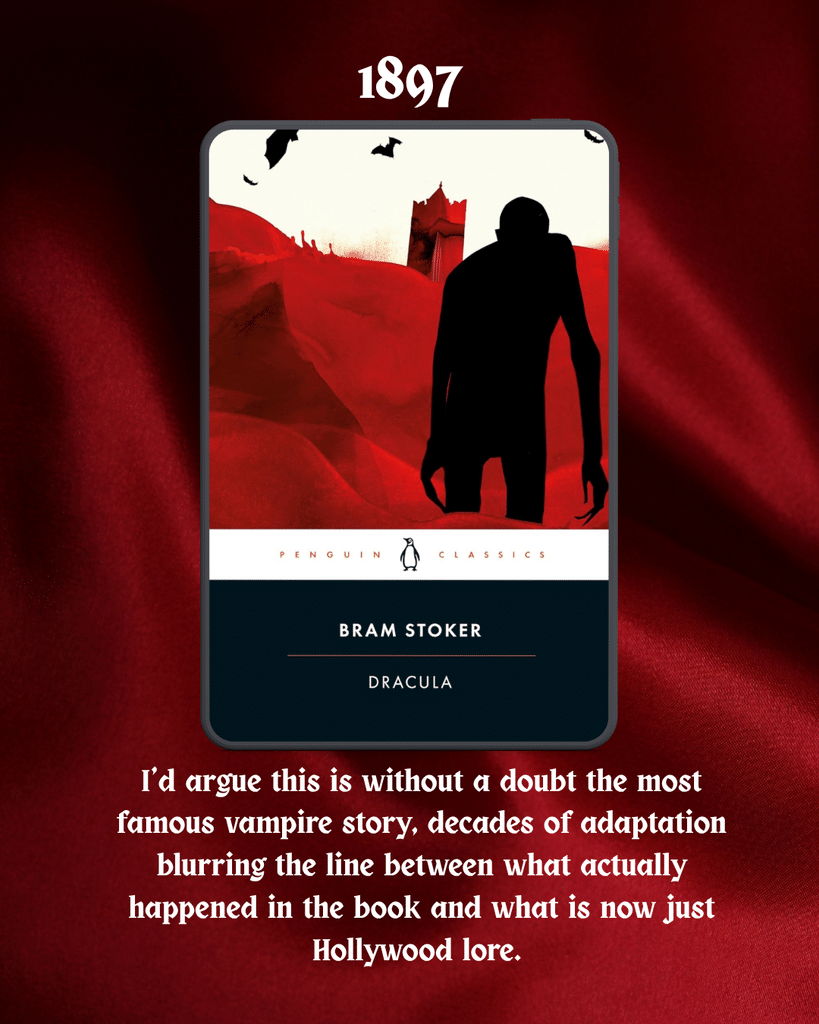
Dracula by Bram Stoker, 1897.
This is without a doubt the most famouos vampire story in the world. Dracula is so famous and well known that there is a blurred line now between what actually happened in the book and what grew out of successive Hollywood adaptations. The collard cape, the stake to the heart and the allergy to sunlight are all features that come from decades of film adaptation. The novel never explicitly describes sharp fangs, and Dracula is actually killed with knives, not stakes.
I think it would be fair to say that most modern vampire lore stems from Dracula, and while in my opinion this isn’t the best vampire novel of the 19th century, it was certainly the most influential, and the first of its kind using the epistolary format and journal entries to tell a supernatural horror story.
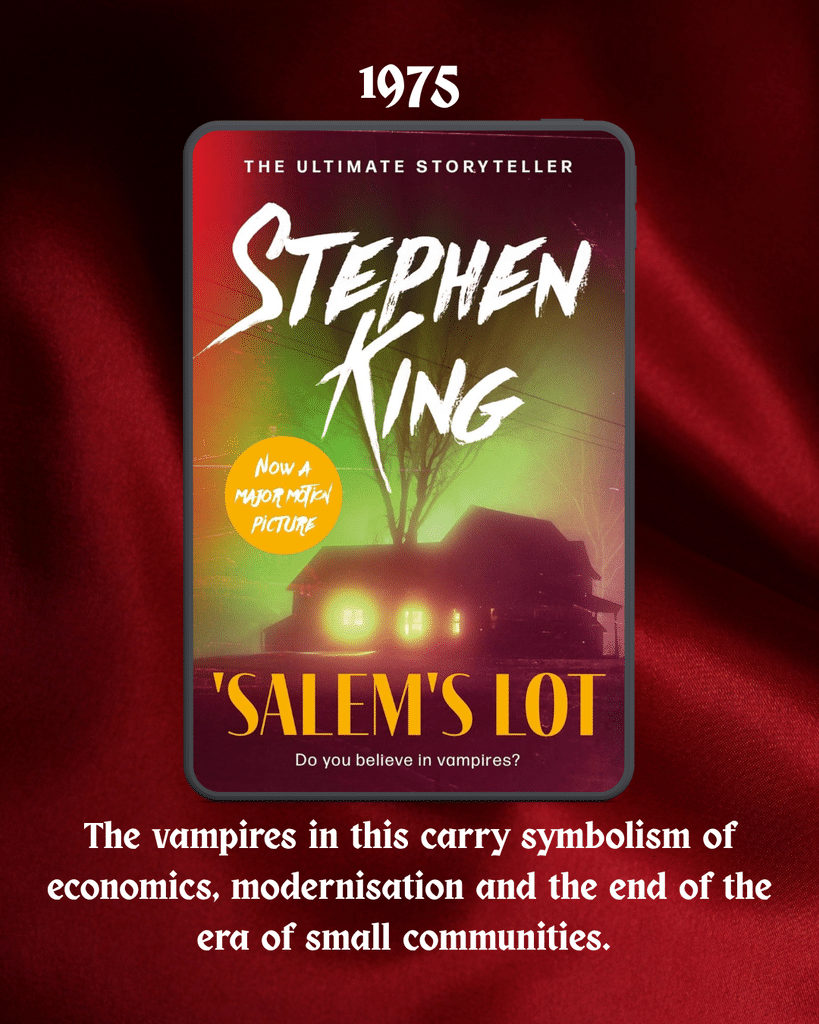
Salem’s Lot, Stephen King, 1975.
This book is a vampire horror masterpiece and that’s for several reasons. The first is that King brought the vampire metaphor into the modern world and changed it from a symbol of lust, sexual desire and repressed sexuality to a symbol of foreign interference, modernity, globalisation and the destruction of the small town in America. Barton is seen as a foreign entity bringing his business enterprise to this sleepy little town of Salem’s Lot and he takes the soul out of it. The townsfolk fight against it to the last man, but they have little power in the face of an established global corporation.
I loved this book. Even though it it set in ‘modern’ America, the creepy old Victorian-era house on the hill is there as a constant reminder of the past coming to haunt the present. It watches over the town like Dracula’s castle, and it will wait for as long as it needs to.
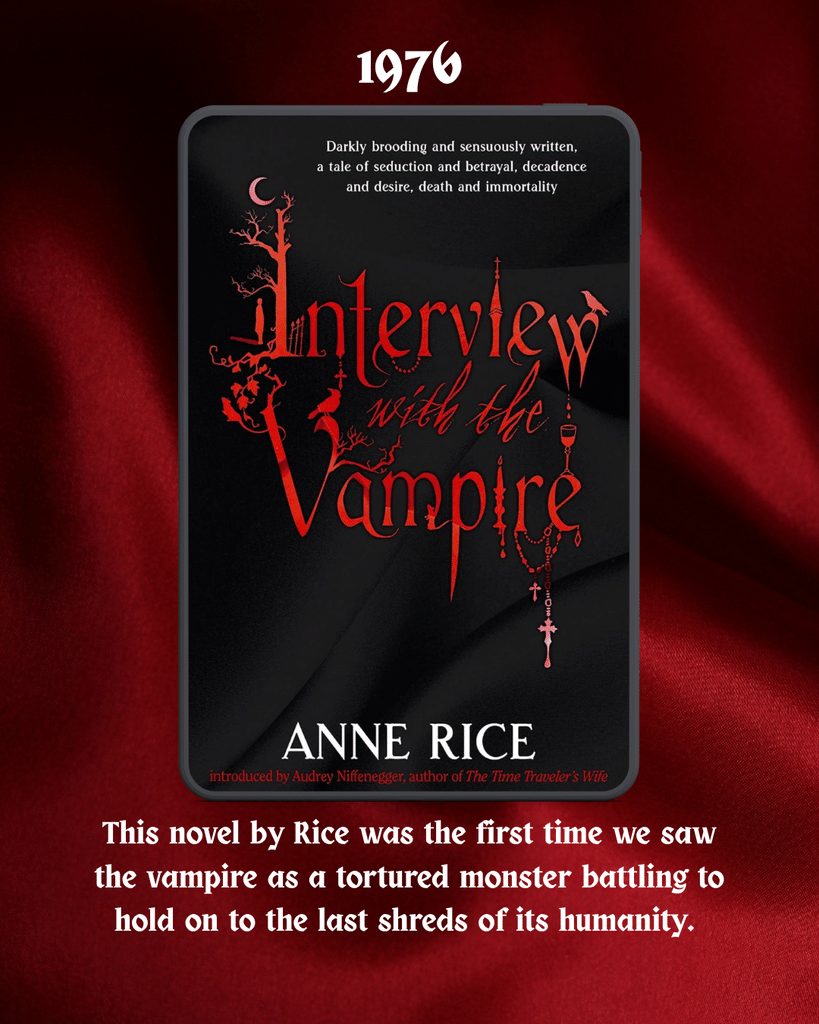
Interview With The Vampire, Anne Rice, 1976
This was the first time we saw the vampire as a tormented, lost soul fighting to hang on to the last shreds of humanity. In Louis Le Pointe Du Lac we have a narrator who tries to reject what he has become, and tells us a story of his life in the shadows over two centuries. Through the vampires Lestat and Louis we see the internal battle between good and evil, your nature vs what you nurture and the struggle of living with free will when you also have immortality.
This was a stunning book and Rice weaves in some of her own personal tragedy through the character of Claudia, a child vampire. This book is a Gothic masterpiece and has been immortalised in film with Tom Cruise and Brad Pitt and then with a more recent series adaptation starring Sam Reid and Jacob Anderson. It’s tragic, melancholic, sometimes funny and all the time broody and atmospheric. She is a master of horror.
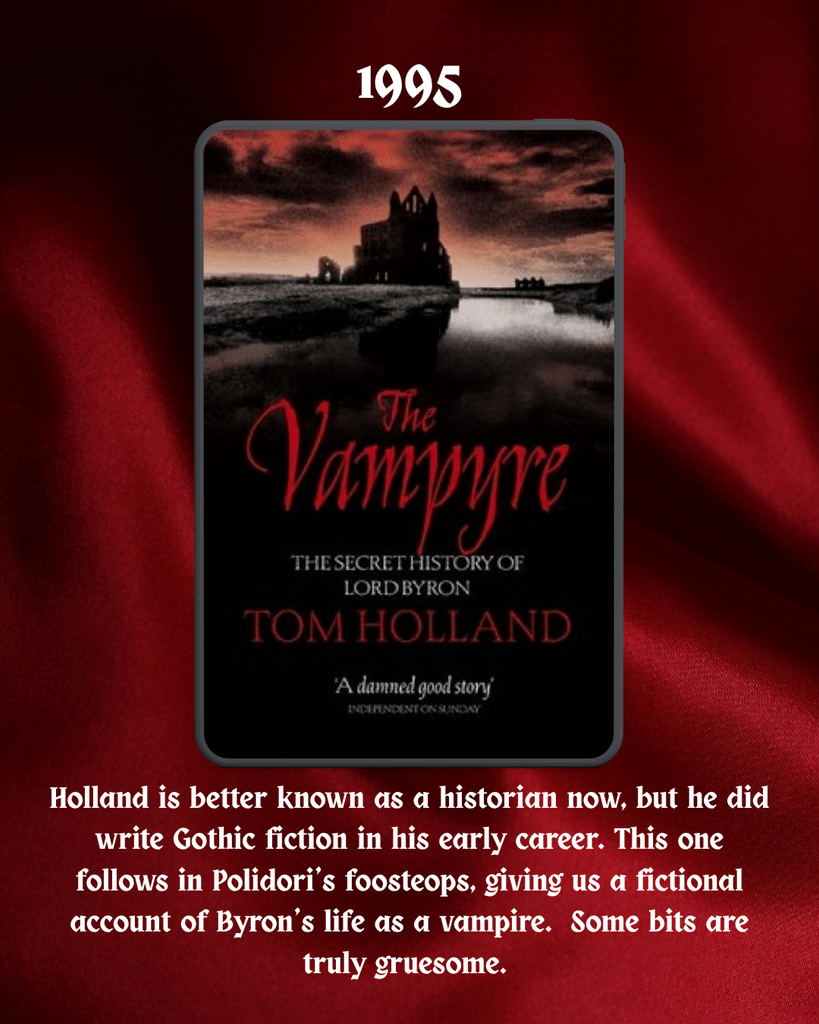
The Vampyre, Tom Holland, 1995.
Tom Holland is widely known as a historian now but in his earlier career he did write some Gothic and historical horror fiction. I struggled with this novel for how very monstrous it was, and the plot wasn’t always solid, however, it was a great read. It’s a mix of The Silence Of The Lambs and Interview With The Vampire and takes us to a completely different setting of Ottoman-occupied Greece. We follow a fictional account of Lord Byron’s life as an exile vampire moving through Europe. There are parts in this book that are truly monstrous, and you will need to go and cuddle a pet or one of your kids straight after.
Love vampire fiction?
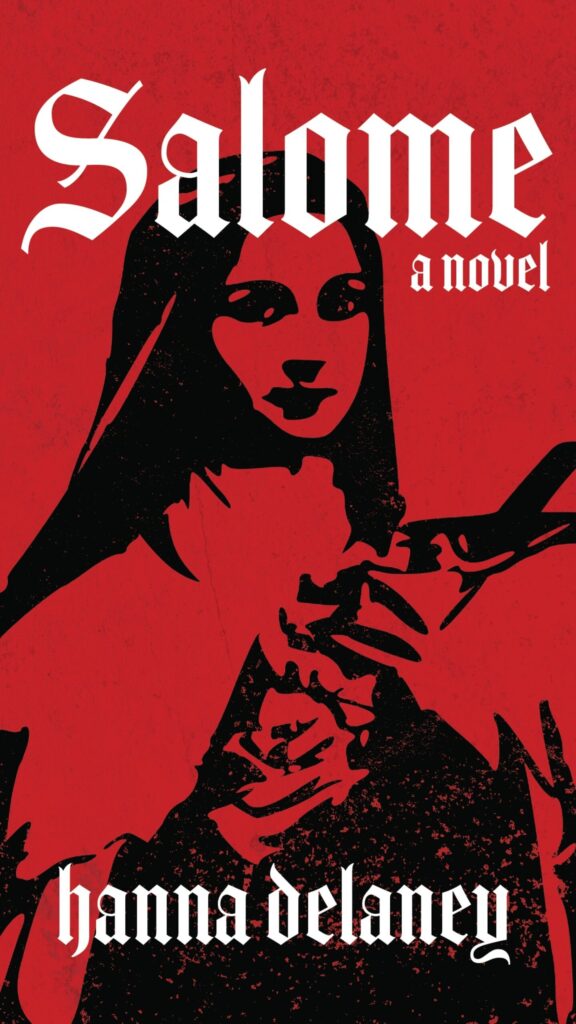
I’m Hanna, and I’m a horror author from Liverpool. I published my debut novel Oceanus in 2024. I have a BA and an MA in English Literature and I have long been a fan of Gothic fiction but especially Gothic horror. My latest book, Salome, is a Gothic religious horror novel about a young benedictine novice who becomes a vampire slayer in 1880s Liverpool.
Leave a Reply