
Katharine Kapodistria is a British author living in Greece with her family. She is a fantasy author whose work is inspired by European myths and folklore. We caught up this summer to talk about her debut novel Underworld, a reimagining of the Persephone myth.
- Your debut novel Underworld has just been released. What was the most amazing part of this journey for you?
Opening my ebook reader to see my novel next to ‘real’ books, seeing the cover art for the first time, receiving the author proof copy, and reading my first ‘official’ reviews on Goodreads were all great moments, but the most amazing part was probably getting beta-reader feedback. My beta readers were all girls in my target market age group (16-25), and they were my first readers, apart from those who read the original serialisation on Substack. I just loved seeing, through their comments, how they recognised themselves and their own struggles, our broken world, and their power to change it.
2. What was the most interesting thing you picked up when researching for this story?
When I first had the seed of the idea for Underworld, I started poking around online. I’ve been a huge mythology nerd since I was a child, but I mainly knew the stories. I looked up the name Persephone and I read that its meaning isn’t clear, but one of the potential meanings is she who brings death. The moment I read that, I knew exactly who my Persephone was.
3. What inspired you to write this novel?
It was a combination of things, really. The first was just wanting to give Persephone a more badass story. She was always one of my least-favourite Greek goddesses because she always seemed so passive and weak. She’s essentially just a supporting character in her own story, as the baddie Hades, Zeus and her devoted mother Demeter steal all the limelight. That got me thinking about the stories society tells us as women, and it went on from there. The other reason was that I was angry. Something really awful happened to my eldest daughter at the hands of someone she trusted. (Don’t worry—I’ve checked with her that she’s OK about me sharing this.) And the whole incident and aftermath played out like a textbook in cliches. The boy’s father even tried to excuse his behaviour by literally saying ‘boys will be boys’. And I thought, How long? How many years and centuries and millennia is this going to continue? For privileged white women in the west like me, right now is as good as it’s ever been, and it’s still not good enough. My daughter is fighting the same battles I was 25 years ago. And they’re the same battles we’ve been fighting forever. It seemed fitting to use ancient Greece as a backdrop for a story about this, because it’s where some of the most poisonous ideas about women came from: that they were deformed versions of men; that ‘hysteria’—the wandering womb—was a medical condition that made women irrational and unreliable. The repercussions of that little idea still haunt us to this day. I wanted to expose the insidious nature of often-repeated lies that seem to become truth. (In the novel, the gods aren’t really as powerful and immortal as mythology would have us believe.) And I wanted to write a character that showed young women that all their experiences, even the awful, harrowing ones, are part of who they are, but they don’t define them. I wanted to show a smart, talented and essentially kind (if misguided) girl having her power taken away, and then taking it back.
4. What’s next in the pipeline for you?
I’m currently finalising a little ebook of short stories called Disenchanted: Five cautionary tales of Faerie. A.C. Sanders is doing the cover art, and I’m really excited about it! I’m also in the middle of serialising a medieval crossworlds fantasy on Substack, but I have a shiny new idea for an epic high fantasy too. It’s always been my favourite genre.
5. Did you always want to be a fantasy author?
Oh no! I’ve loved fantasy fiction all my life. Some of my earliest memories involve drawing or painting at the kitchen table while listening to my mum’s audio cassettes of The Hobbit. I’ve devoured books all my life too, but I never thought I was capable of writing one. It took me until October 2024, just after my 40th birthday, to try my hand at a short story. I think it was some sort of midlife crisis! Anyway, it opened a floodgate inside me because now I just can’t stop!
6. What is your writing Kryptonite?
Multiple files! Both digital and hard copy. I have Word docs on my laptop, notes in the Notes app on my phone, Google docs spread over two separate accounts, loose sheets of paper, spiral-bound files… I’ve never set up a sensible system because I think that when I started this writing journey, I didn’t realise how much it was going to grow and take over my life!
7. How did publishing your first book change your process of writing?
I’m fascinated by how other people write because I find the way I wrote Underworld, and the way I’m writing my current serial, so bizarre. I’m a hyper-organised person IRL. I have calendars, and daily to-do lists, and everything is filed away. I imagined I would be the same with writing: meticulously planning everything, having spreadsheets for characters and places, writing chronologically and all that. Not so. At all. The first thing I wrote for Underworld was a scene in the middle of the book, and the ending. And I was a total pantser throughout. I don’t think there’s anything wrong with this way of writing, and I don’t think I’ll change the basic approach because it seems to be my style, but I definitely need a tad more organisation around the written output, as I mentioned in the previous question!
8. What’s your favourite piece of reader feedback you’ve ever received?
My friend read one of my short stories online. She’s one of those lurkers who never leaves a like or comment, and I had no idea she was even reading my stuff. We’re really close as friends, but she’s a non-fiction girl, and as I said, I’m a die-hard fantasy fan. Anyway, she read this short story and called me up bawling her eyes out. That’s not to say I aim to make my friends cry! But for the words I wrote to have affected someone so profoundly was really special.
9. What’s a story you wish more people had read?
It isn’t a fiction book, but it’s full of fairy tales and folk stories: If Women Rose Rooted by Sharon Blackie. I’ve only read a handful of non-fiction, but I think this book, Women Who Run with the Wolves and Braiding Sweetgrass are the ones that have really had an impact on me. There’s so much wisdom contained in their pages, and so much that resonates, and all the authors draw on stories to illustrate their points. That just shows the power of fiction to contain our truth and our heritage, and to pass that down through the generations.
10. Where do you get inspiration for your stories?
I draw a lot on mythology and folklore, but my stories tend to be reimaginings, not retellings. I draw from my own real-life experiences too. I’m fascinated by edge places (hence the name of my Substack, Notes from the Edge), and I like exploring that place between imagination and reality. I think that’s why I write a lot of crossworlds stuff. I like the idea that the Otherworld is all around us, and it sometimes slips in through the cracks.
11. If you could have dinner with one author (dead or alive) who would it be?
There are so many authors whose work has had a great impact on me and my life’s trajectory, like J.R.R. Tolkien and Gerald Durrell, but I’m not sure I’d want to meet them for real. What would I talk about with an Oxford don who was born in the 19th century? So I’d probably choose someone I’ve met through Substack because I think we’d have a great conversation. There are so many people I feel I could have a good natter with on there: Kelly Xan, Ian Patterson and Lydnsey Resnick to name a few. I’d really like to meet Leanne Shawler in real life. She used to be mainstream-published, got disillusioned and took a break, then resurrected her writing life on Substack with The Môrdreigiau Chronicles. I admire so much the way she writes, researches and produces art simply because she loves doing it. I think the joy she gets out of the process shines through in her work.
12. What’s an underrated book that you think is a great story?
Tales from a Stricken Submarine by Christopher Flynn. It’s available as an ebook on Amazon. It isn’t so much underrated as not rated because there was no marketing whatsoever done around it. I only found out about it because I work with Chris, and we were having a drink after work one night, and started talking about writing. I got curious about his book, bought it, and it was brilliant! The concept, the variety of voices, the prose—I was blown away, and it got me wondering how many other amazing stories are out there just gathering dust because no one’s heard of them. Meanwhile, bookshops are being filled with hyped-up ‘bestsellers’, and the Internet is filling up with AI slop. I think the fiction community on Substack is hitting back at that. Of course, there are people (and bots) on the platform that are doing other things, but the little community I’ve found has been so supportive, and there’s so much talent there. I think if I could only read fiction produced by people on that platform for the rest of my life, I’d be happy.
Underworld
Born a goddess. Raised a warrior. Destined to bring death and destruction.
For a hundred lives of men, Persefóni has lived in an idyllic valley in Arkadía, honing her hunting and combat
skills in the company of her guardian, the immortal warrior Ánitos. Then her world is forever changed when
Dímitra arrives, laying claim to Persefóni as her daughter, and taking her back to the Court of Ólimbos.
There, the gods and goddesses of legend seek to manipulate and control her. Persefóni pushes back against
the horrors she witnesses, but she hasn’t reckoned on the jealousy and vindictiveness of the gods, or how far
they will go to take revenge.
Blending Greek mythology with with the timeless struggles women face, Underworld explores how Persefóni
came to be the Queen of the Dead, not despite all she suffered, but because of it.
This is Persefóni’s story in her own words. Can she escape her fate? Does she even want to?
You can grab your copy of Underworld by Katharine Kapodistria at https://katharinekapodistria.com/

If you’d like to read more about retellings and reimaginings, fantasy author Ian Barr wrote this terrific blog post explaining the difference between these two things. Click here.
-
Salome, A Gothic Religious Horror Tale Set In The World Of Muldoon.
Salome was inspired by classic Gothic literature such as The Vampire by John Polidori and Dracula by Bram Stoker, offering its own take on the vampire. It is part of the wider Muldoon supernatural thriller universe, a series of Gothic mystery novels set in late-Victorian Liverpool that follow occult detective Daniel Muldoon.
-
Scaring Myself Silly: David B Corder On Ghost Stories And Southern Spooky Sightings.
David B Corder talks ghosts and spooky legends of South Caroline as well as his favourite ghost stories.
-
Scaring Myself Silly: Gabriel Maestes Haunts New Mexico
Horror author Gabriel Maestes talks horror, Halloween and his worst fears in this episode of ‘Scaring Myself Silly’.
-
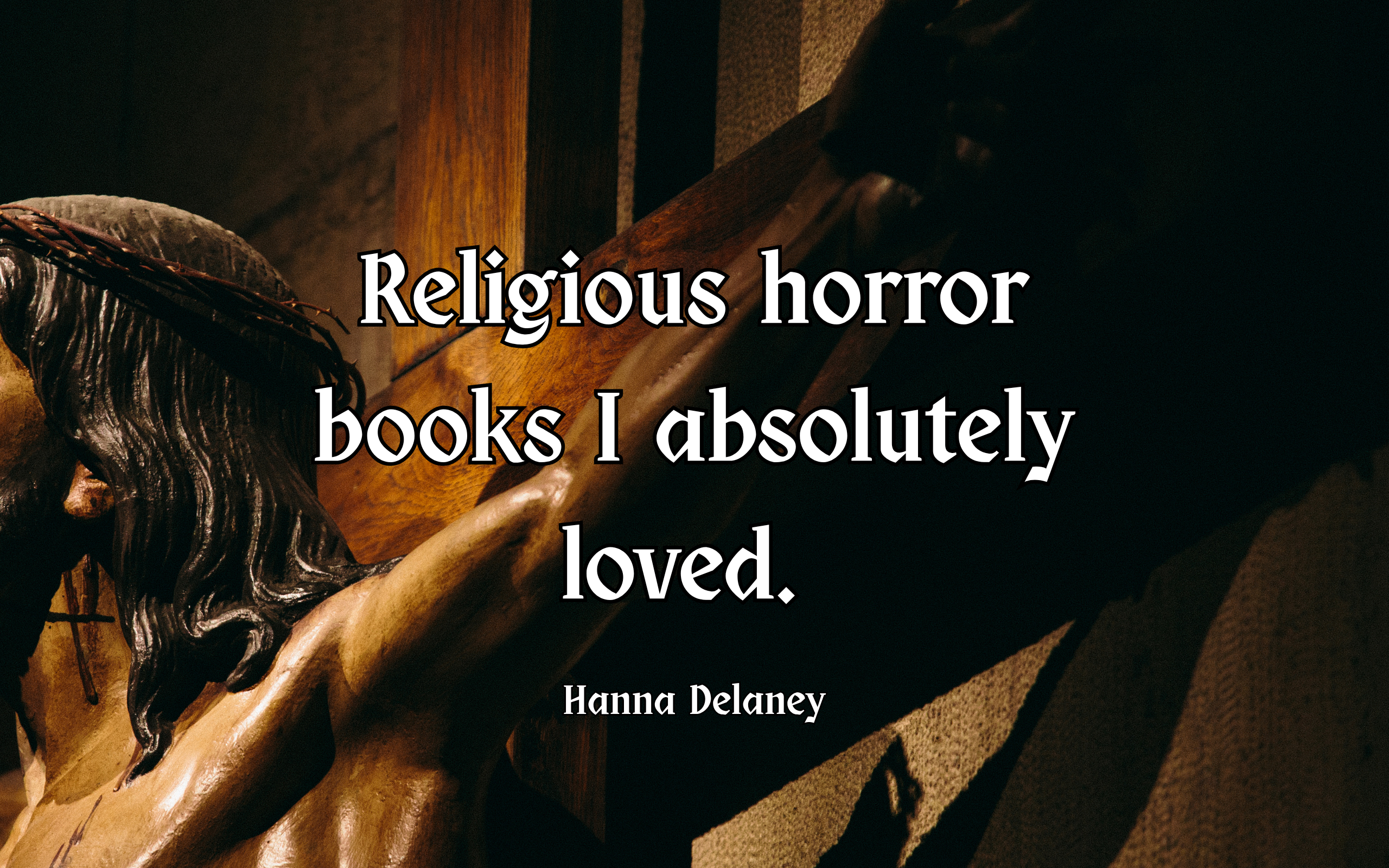
My favourite religious horror books of all time.
Religious horror is one of my favourite horror sub-genres because it usually involves a crisis of faith and the battle to find it again when the horror unfolds around you. Religious horror usually features some kind of redemption arc or a character facing the terror or the supernatural.

Leave a Reply