Is the book you’re reading starting off quite slow? Is the setting really atmospheric and moody, the sky usually dark or overcast? Are the characters brooding or mysterious? Does the building have a locked door or areas that are out of bounds?
It’s probably going to be a Gothic story, but a Gothic aesthetic with chandeliers and men in masks doesn’t make a story Gothic alone. Here I can help you discover what does make a story Gothic by addressing some common misconceptions about the Gothic subgenres.
If you don’t know who I am, I’m Hanna Delaney and I’m a Gothic horror author from Liverpool. I have a BA and an MA in English Literature before becoming an English teacher. The Gothic is something I have paid very close attention to over the last fifteen years.
So what is Gothic?
This is a subgenre that can belong to horror, fantasy, romance and even science fiction. A Gothic story usually has a few of these things:
- A mystery.
- Locked doors.
- A hidden scandal or secret.
- A tormented hero or male love interest.
- A dark, brooding setting.
- The past haunting the present.
- The supernatural invoking terror.
- Isolation.
A Gothic story doesn’t have to have all of these things but it will have one or two. The thing with these features is that they are not for the aesthetic, they are the core elements of the plot. The story cannot be told without them. Notice I didn’t say candelabras and abandoned mansions? They can feature, but they’re superficial.
Common misconceptions of Gothic fiction:
‘Gothic stories have to take place in an old decaying mansion or castle.’
They don’t. The atmosphere of the Gothic can be created anywhere, it’s just really easy to do that with a decaying old house or castle. Gothic can be in a forest, moorland or even a Victorian townhouse in the heart of a city. The point is the moody atmosphere and the setting. Rosemary’s Baby took place in a Manhattan apartment in the 1960s. This was Gothic for several reasons, and we did not need a castle.
Rosemary is the innocent heroine who finds herself in the company of Satanists posing as older neighbours wanting to help her and look out for her and her husband. The atmosphere of the building is incredibly Gothic, even though Rosemary furnishes her apartment in the latest trending furniture and colours. It’s about that foreboding, oppressive atmosphere and the strange noises that occur. It’s about the mysteries surrounding tenants who’ve come and gone, and rumours of what was found in the laundry room in the basement…
The building in a Gothic story can be any building. It doesn’t have to be a 400 year-old castle falling into ruin. If we look at Southern Gothic, we have hot, sticky oppressive climates and rusted clapboard houses rather than castles. The atmosphere of the abandoned, haunted landscape can be enough to make it Gothic. The lanscape bearing the scars of a horrible past (think slavery in southern states and old plantations) can be very Gothic. It’s not always chilling rain and winds over moors.
Their Eyes Were Watching God by Zora Neal Hurston is deeply rooted in the rural American South, the storms and swamps demonstrating the violence of nature. It’s not as dark as other southern Gothic novels, but the setting is certainly Gothic.
‘There has to be an isolated castle or mansion for it to be Gothic.’
Building on what has already been said about the need for a castle or mansion, this is also untrue. The isolation that takes place in a Gothic story can be literal e.g. a mansion on the outskirts of a town… or it can be metaphorical. The isolation can be the isolation of the spirit, a character feeling isolated from other members of the household, or the isolation of mind from body.
Eleanor Vance in The Haunting Of Hill House becomes emotionally isolated from her peers. She starts to distrust them, and convinces herself that they just don’t want her to have the house. Nobody has said anything, but Eleanor feels distanced from her peers and feels she must isolate herself to be closer to the house.
In Rebecca, the female heroine is incredibly isolated because she doesn’t know anybody in Maxim’s world. She has no friends, and no family to speak of. She is not only isolated by her physical location on the coast of Cornwall, but she is also spiritually isolated from her husband and his world.
Isolation does not have to be a building, but it can be, and it can be any building if the psychological tension is there. This is another key element of Gothic fiction: psychological horror.
‘The Gothic can’t have humour.’
This is another common misconception. Readers are quick to dismiss a Gothic horror story as ‘cosy horror’ because someone made a joke. Would they say the same thing when a joke is made in The Conjuring or the Insidious franchise? Humour is a device writers use to break the tension in an otherwise tense story. This is otherwise known as comic relief or light relief, and it can help the reader settle back into the build up to something scary. You can’t just have creeping dread, followed by dread, dread and dread. Readers will lose interest… it also helps readers bond with the characters if they have a sense of humour. Dark humour or awkward situations can fit perfectly in a Gothic story.
Writers I love for injecting humour into the Gothic are Oscar Wilde, Jane Austen and Wilkie Collins.
‘Gothic fiction always has supernatural elements.’
Not true! Though a lot of Gothic stories feature supernatural elements, not all Gothic stories go there. One of the great features of the Gothic is the appearance of something supernatural, but it is in fact just something real, albeit scary. An unexpected sighting of someone wandering the corridor when you thought you were the only one in the house might seem supernatural, but it is in fact a lodger you weren’t aware of.
If you think about Great Expectations, Jane Eyre or The Woman In White, what characters believe to be supernatural is actually just someone who is real but for whatever reason, they’re insane, odd or dishevelled. The supernatural in this context is to demonstrate the suggestibility of the heroine or narrator as they have been frightened by the atmosphere, the brooding characters or the dark, isolated setting. The point is that they are seeing things that aren’t the everyday, and are therefore unsettling.
Gothic stories that do actually feature the supernatural are usually using it as a device. Vampires wouldn’t usually exist in a Gothic story unless it was for the purpose of the story. For example, Dracula is a predatory, repulsive monster who invades and spreads his evil. Dracula (though adapted so often that the character has morphed into a tragic hero) can be interpreted as a device to tell a story of foreign invasion, the corruption of the innocent and the spread of unknown and lethal diseases. He’s not just a vampire for the sake of being a vampire. It is the same for Carmilla and John Polidori’s Lord Ruthven: they are metaphors for other things. Gothic stories often employ supernatural characters or phenomena to tell a story about something very real.
Ghosts in Gothic stories are usually a symbol or a reminder of something terrible that happened in the past. In The Woman In Black, the ghost is vengeful and relentless. She’s not just there to frighten people, she is there to carry out eternal revenge for the wrongs done to her. She haunts Eel Marsh House and the village to remind them of the price she paid, and a cost that can never be reimbursed.
‘There has to be an aristocratic man with a dark past.’
Brooding lords and counts are a common feature of Gothic stories, but they’re not essential. Heathcliff is no lord, and he’s not even hiding anything he’s done or said. The Byronic hero is a core feature of the Gothic, giving us a tormented hero who wants to be a better man but is haunted by his past, but he’s not essential.
There are no aristocrats in The Haunting Of Hill House or Rosemary’s Baby and they’re just as Gothic and creepy as any other Gothic horror story.
Some sort of dark lord or morally grey man/demon prince/academic is a key feature in Gothic Romantasy and Gothic romance, but if it’s missing one, that doesn’t mean it’s not Gothic. There are other things that make a Gothic story, too.
‘Gothic can’t have a happy ending.’
How anyone can say this when the line, ‘reader, I married him,’ is out there is beyond me. Though Gothic romantic relationships often border on unhealthy levels of obsession, scandal, taboo and jealousy, they can have reasonably happy endings. Usually there is some sort of compromise or the heroine having to accept the hero’s flaws and misdeeds. There won’t necessarily be wedding bells or flowers but sometimes there is a marriage or escape from the trouble the characters go through.
In The Bloody Chamber And Other Stories by Angela Carter, we have some happier endings. They’re not exactly ‘fairy tale’ but they fit right in.
‘I thought it was supposed to be romantic.’
Though it is called a ‘Gothic Romance’, it doesn’t mean ‘Romance’ in the modern, commercial sense. Often, the relationship is between a nervous, naive heroine and a brooding, morally grey hero. There is often intense emotion, psychological torment and sometimes a tragic ending.
The Phantom Of The opera is another novel that has been adapted to the point where Christine looks like she’s beauty falling for the beast. This certainly wasn’t the case in the book. There was not much romance, and I think when people see the film first and come to the book, they get a surprise. It’s definitely more dark.
‘It doesn’t explain anything.’
It explained some things but left you wondering. Part of the experience of the Gothic is to doubt what you see. Sometimes that is the insanity, or the mad woman in the attic, but sometimes it’s about never knowing. If we think of Eleanor Vance in The Haunting Of Hill House, we’ll never know who was insane and what was really happening. Same with The Yellow Wallpaper. We will never know the truth, and that’s the point.
The Gothic is supposed to be unsettling, and sometimes that comes with not knowing the whole truth.
‘The past is just a backdrop.’
The past haunting the present is actually a core feature of the Gothic. Family curses, descendents answering for ancestors’ crimes and haunted houses is all part of the deeper exploration of how actions can have consequences that echo into the corridors of time. Usually something needs to be addressed, and the past is there to remind the characters of that.
‘Gothic monsters are just misunderstood.’
Though Shelley provoked a sympathetic reaction for the creature in Frankenstein, the real monster was Victor, and he was not misunderstood. Dracula was written as a terrifying, repulsive predator, not a romantic interest like he is in some of the film adaptations. Sometimes monsters are just monsters, but some help us explore the complexity of the human psyche (Dr Jekyll and Mr Hyde and Dorian Gray).
I think what doesn’t help here is that when a classic Gothic story is adapted in cinema through the decades, the monster is often rewritten to become a tragic hero, or a misunderstood being.
Dracula and Nosferatu: an example.
Nosferatu in film is a complete monster: A garish, repulsive creature with long nails and skin peeling off. Dracula in comparison has been adapted into a refined gentleman, hiding his monstrous form, refining his human appearance with every gallon of blood he drinks. Ironically, the film character of Count Orlok has remained more loyal to Bram Stoker’s version of Dracula than adaptations such as Bram Stoker’s Dracula or Dracula Untold. The love story between him and Mina Harker has been completely invented for the screen along with fangs and the big cloak with the collar. In the book he was a monster and essentially a rapist in the novel, putting his ‘reeking lips’ on Mina’s throat. The entire scene describing the attack conveys a sense of violation. Mina has been bitten but also, Dracula forces her to drink his blood.
In some modern Gothic books, the monster is misunderstood, but monsters and monstrous people threatening the characters is a common and completely normal feature of Gothic horror especially.
‘The romance is unhealthy. They are obsessed with each other.’
You’re right about that one, it’s not always healthy, but that’s the point. Think of films like Crimson Peak and books like Wuthering Heights. There is usually jealousy, class disparity, forbidden relationships or deep, relentless obsession.
Sometimes the unhealthy relationship is alluded to, rather than explicitly in front of us. Think of Madeline and Roderick Usher in the Fall Of The House Of Usher: it is implied that they have an incestous relationship, and because we never really know, it’s unsettling too.
Cathy and Heathcliff are obsessed with each other so much that they enjoy tormenting one another… even to the point of self-destruction.
Can you think of any other Gothic features that are often misunderstood? Let me know in the comments.
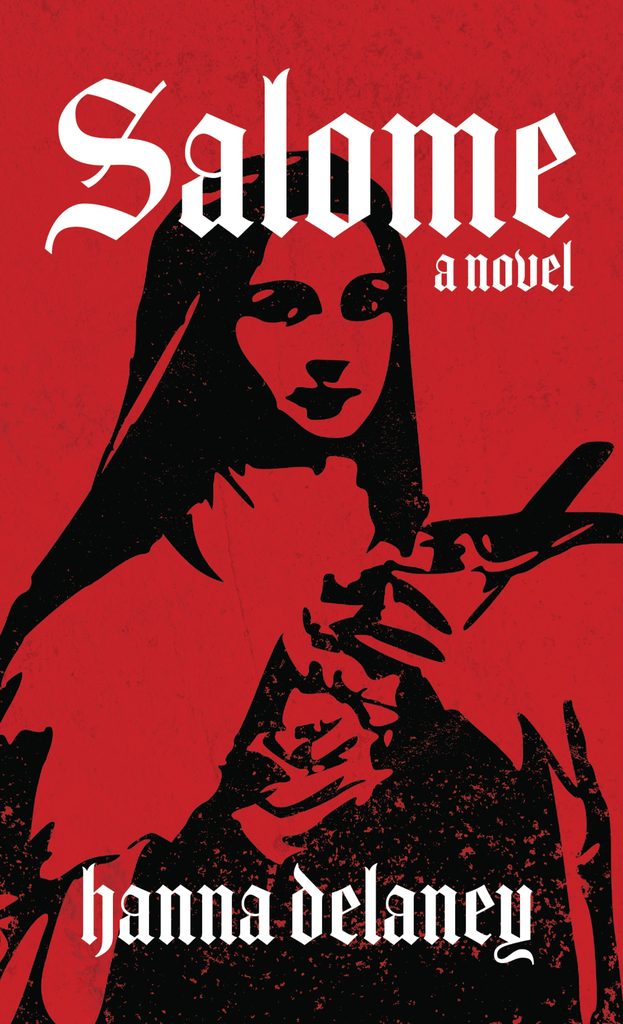
Love Gothic horror and vampires? Salome is out now.
1885
Salome discovers her true purpose when she murders another sister in her convent in Turin.
She expects the gallows.
Instead she is brought to Liverpool to join a clandestine convent.
Her guides hope she will use her gift for good, but it is not up to them. God has made her suffer. Demons promise comfort.
The road ahead remains unpaved, but all signs point to temptation.
Leave a Reply