In the run up to the October 2026 release of Salome, I’m talking about the things that inspired this book and the characters within it. One of the major influences was Agatha Van Helsing, a character created for the BBC production of Dracula written by Mark Gatiss and Steven Moffat. It was loosely based on the 1897 Stoker novel, with its own modern spin however, the start of this series began in the 19th century where we meet Agatha Van Helsing.
Stationed in a convent in Budapest, Agatha is fascinated by Dracula, and uses some of her knowledge of vampires to prevent him from coming into the convent where she and her spiritual sisters are harbouring Mina and Jonathan.
In the book, Sister Agatha is a compassionate nun who cares for the traumatised Jonathan Harker, and Abraham Van Helsing is an older, Dutch occult detective. Gatiss and Moffat blended those characters to create a sharp, resourceful nun who is battling with her own faith as she defends the convent against Dracula.
I loved this new character, so much so that I was inspired to write Muldoon and Salome. The idea of a nun, priest or monk having a crisis of faith in the face of supernatural terror is nothing new: Father Damien Karras in The Exorcist suffers from a crisis of faith as he grieves for his mother. His regret, guilt and loss render him vulnerable to the demon that has possessed eleven-year-old Regan, increasing the risk of the exorcism not going well.
A crisis of faith in the face of evil makes a character so much more relatable, and a crisis of faith doesn’t always mean they’ve lost it forever, it just means they’ve had it shaken around a bit and need to find it again. In Salem’s Lot, Father Callahan struggles with his alcoholism as much as he struggles with his faith, as does father Matthieu in Between Two Fires. It appears it’s a bit of a trope.
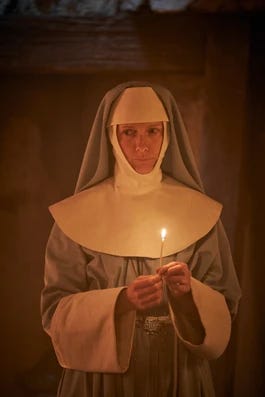
Saying that, Agatha Van Helsing’s doubt actually helps her fight Dracula. Rather than relying on her spiritual certainty and Christian teachings, she uses her knowledge of folklore and outsmarts him at several points in the story with logic, offering herself in Mina’s place when Dracula finally gets in to the convent.
She uses logic and proof to convince the crew of the Demeter that she is not the vampire, it is actually Dracula who is picking off the passengers one by one. I loved the portrayal of a fierce, witty religious sister (and she would have been more educated than most women, having time to study and write) who shows no fear in the face of the vampire.
If you haven’t seen the BBC production of Dracula yet, it’s such a good limited series. I was worried I wouldn’t like it because really, how many Dracula adaptations have we seen already? But it was a refreshing adaptation and I loved him coming into the modern world and wreaking havoc.
Religious horror needs some crisis of faith.
I was thinking about the best religious horror stories out there, and I think a crisis of faith is fundamental. How could it not be? Once there is a hole to pick in the fabric, the demons or the vampires come in, making the hole wider until there’s no going back.
In The Exorcist, Karras becomes Regan’s only hope, and he proves his faith to himself (I won’t ruin it in case you haven’t seen it) with his final act. I thought that was beautiful and effective at showing that despair or destruction may be inevitable, but it can end with you.
Religious horror to me is always about faith: the faith you put in the characters, the outcome, the story or the decisions the characters make. You have your faith challenged repeatedly, especially if you thought, ‘It will be okay’. This very rarely happens for horror, but you hang on to the end with some hope. If you watch The Conjuring, you might hope everything will turn out all right in the end. If you read Rosemary’s Baby, you might just look at the wall for a while until you’ve processed the horror. It’s the same with The Omen. We watch these films or read these books and have our faith shattered, but we look around at the real world, maybe cuddle the cat or the kids, and we’re okay. Our faith in people is (mostly) restored once we realise what we just read is fiction. Religious horror is about the fight between good and evil, and sometimes evil wins.
Whatever we believe in (or don’t), evil exists. I believe it’s our moral obligation to fight evil. We can resist voting for evil, buying evil, sponsoring evil or staying silent when it strikes. We don’t have to tolerate evil, and we don’t have to let it grow. We enjoy these stories. They test us, making us consider what we take for granted, or how we’d like things not to be.
Faith in context: Salome.
Salome is set in the 1880s. She comes from Piedmont, Italy. At this point in history, the vast majority of Italy’s population would have been Catholic, and one or two children from a large family joining the church would not have been unusual. Taking the vow and becoming a monk, a nun or a priest would have been something a lot of young men and women did through a calling, of course, but it was also incredibly common for people to join the church for the prospects afforded them. A poor child from a farming family could learn to read and write, they’d have a roof over their heads, and they’d always have clothing to wear and food to eat (even if they take a vow of poverty). A son or daughter from a wealthy family could be sent to a convent because he or she was surplus to requirement, or they’d been involved in something so scandalous it would affect the family’s reputation if they weren’t sent away.
This would have resulted in some men and women of the cloth not always feeling grounded in their faith, and perhaps not always carrying out God’s work as intended. We hear of stories of cruelty, neglect and emotional coldness told by survivors who were in the care of religious orders throughout the late nineteenth and twentieth century. This made me think about the people trusted with the care of these children. What if not everyone who cared for the children in an orphanage had felt a calling to do that? What if they just wanted to find a way out of their own predicament, and had no emotional capacity to care for the vulnerable with compassion? There are those who saw suffering as bringing already innocent people even closer to God, and they were so enamoured with their own vision, they starved people in the process.
It’s not clear in Dracula whether Agatha Van Helsing entered the Church of her own accord or if it was just a better option than whatever she’d grown up in, but we don’t get the sense that she feels particularly grounded in her faith while living in Budapest. She is described as an atheist nun, challenging every belief out there, and she seems to rediscover her faith when she meets the once thought to be mythical vampire.
Orphans and the Church.
The Catholic Church has cared for orphans for millennia, many of whom grew up and entered monastic life having been raised in monasteries, or schools and orphanages run by the clergy. This practice was still the case in the 19th century.
Salome is a novice, and she doesn’t specify at any point that becoming a nun was a particular calling of hers, nor was it something she’d put herself forward for. It was just what happened. Taken in by the Church after her mother’s death, she simply adopts convent life, never questioning the choices made for her. She can’t, because the Church is all she has. You don’t bite the hand that feeds you.
I wanted to create a character who has to go on her own quest to find out who she is, where she fits and why any of it matters. I wanted her to grow out of the sheepish, shy Italian girl and become more assertive and self-assured. Her powers are a gift, but they are hers to do with as she pleases. When she realises she’s not ‘ordinary’, she considers her own life and the relationships that have led her to this point. She realises that God has made her suffer, and those who have cared for her have had a hand in that.
Salome must grapple with the knowledge of what has been taken from her, and what her relationship with God will be… all while learning to fight vampires and demons in the busy port city of Liverpool.
As with Agatha Van Helsing, her fight for her own soul will be triggered by a crisis of faith and ever-growing temptation.
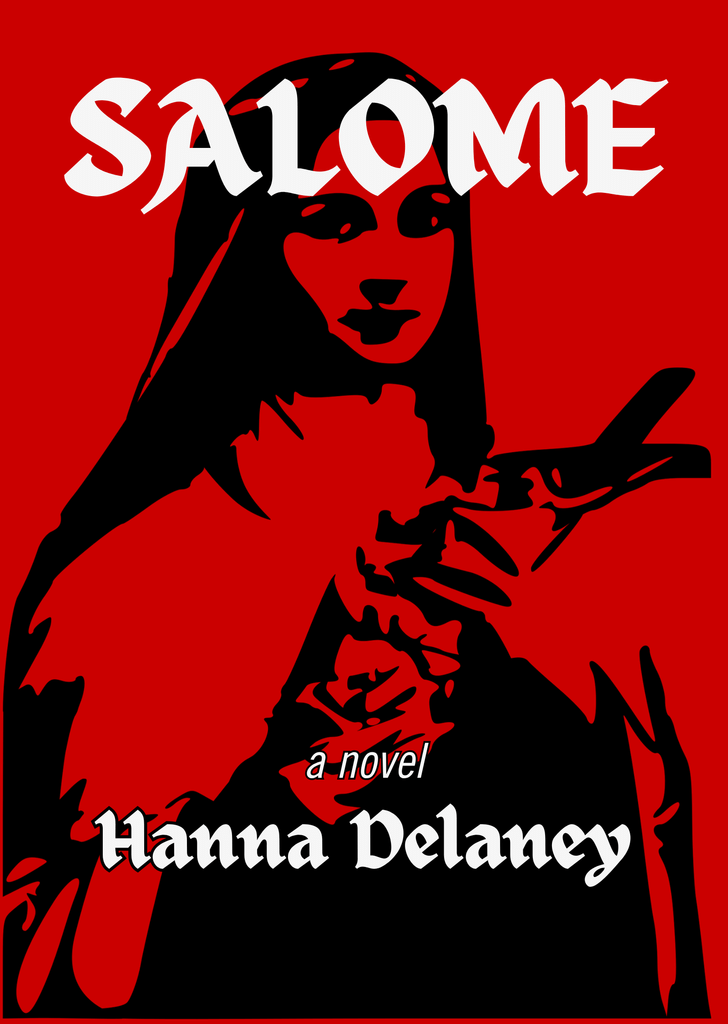
Salome is a Gothic, religious horror mystery set in 1880s Liverpool, the same universe as Muldoon. It will be available for general sale on 16th October 2026 but you can preorder now.
Salome is a novice Benedictine nun who discovers her true purpose when she murders another sister inside her convent in Turin.
After she makes her confession, she awaits the gallows, but she is spared and instead brought to Liverpool to join a clandestine order.
The training is relentless, and she struggles to prove her worth when she is plagued by a recurring nightmare. Every time she sleeps, she is haunted by an enemy she doesn’t know how to fight. Her guardians cannot help her, she must find the way forward alone.
Salome has a rare gift, one that the Church hopes will help them in the enduring battle against the forces of Evil.
Her guides hope she will use her gift for good, but it is not up to them.
God has made her suffer. Demons promise comfort.
The road ahead is still unpaved, but all the signs point to temptation.
Add Salome to your ‘Want To Read’ On Goodreads, or preorder on Gimmebook (the ebook works on every device).
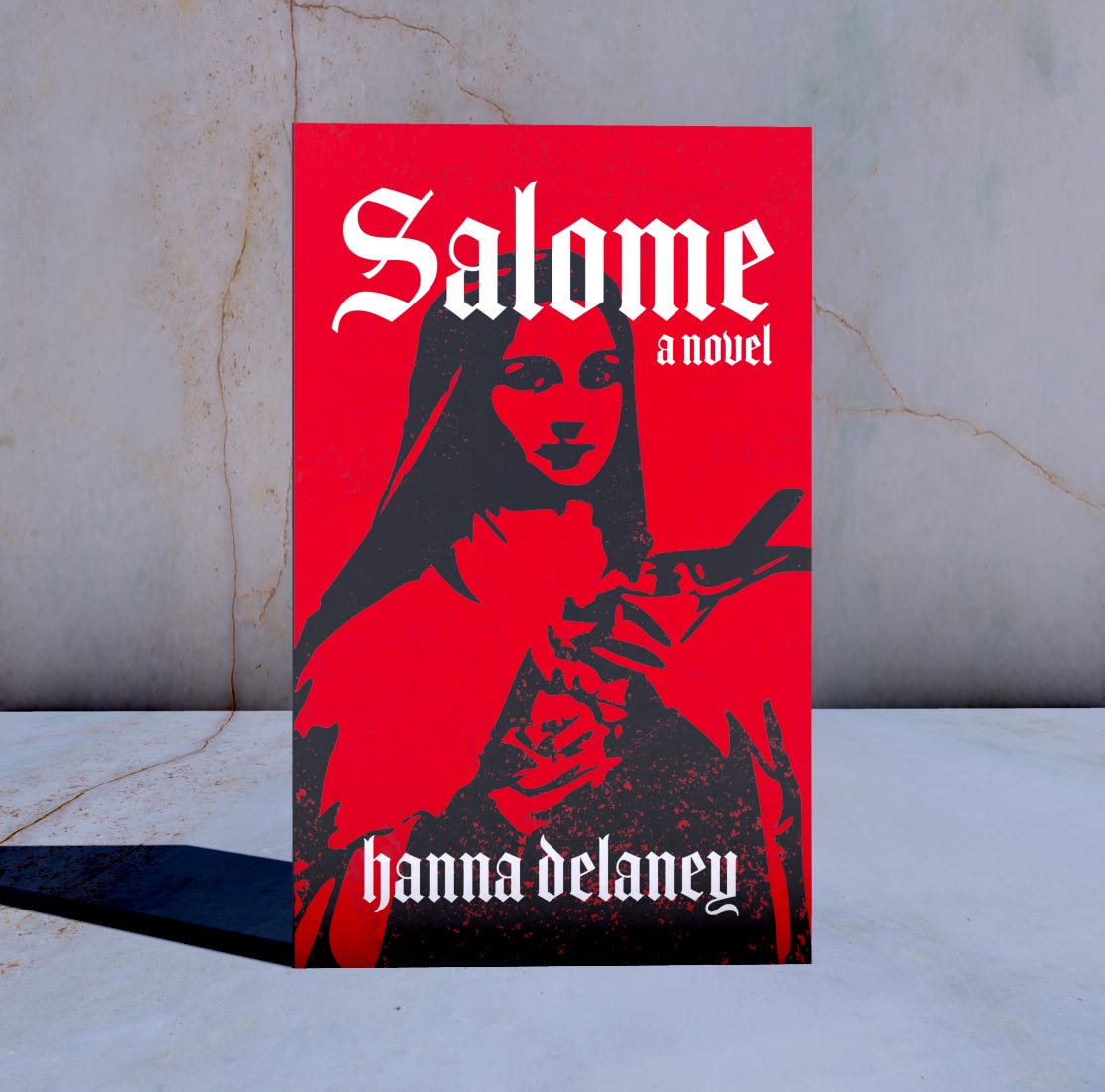
Salome by Hanna Delaney is a religious horror mystery set in 1880s Liverpool. It is about a young Benedictine nun who confesses to murdering a fellow novice at their convent in Turin. She is spared the gallows and is brought to a clandestine order in Liverpool, where she must prove herself a worthy member of the order of St Michael.
Salome is a Gothic horror novel inspired by classic vampire stories such as Dracula, and fans of stories about fear and faith such as The Exorcist and Between Two Fires will enjoy the themes of found family, enduring evil, and making the right decision, even if it is the most painful one.

Leave a Reply