If you haven’t seen K-pop Demon Hunters yet, where have you been? It’s an animated film about a k-pop group who are demon hunters behind the scenes. When my teenage sister first told me I needed to see it, I shrugged it off, but I’m glad I listened in the end.
No major spoilers ahead.

Rumi, Mira and Zoey are strong characters from the start. Why is this? They’re different. They’re not the same height (I don’t know why this was so important to me but I really noticed it as a feature), they like slightly different things and their personalities vary wildly. This was a promising start. At the beginning when they discover they’re on a hijacked flight and travelling in the opposite direction to their show, they seem annoyed rather than ‘Oh my God, what should we do?’
The witty remarks and comebacks from the k-pop trio are something reminiscent of Buffy without being too annoying: they do actually just crack on and fight demons. Their hatred for the demons they seek to destroy is so ingrained into them that it’s a way of life. Their reasons for hating demons vary from incredibly personal (Rumi’s parentage) to just the status quo. This is ripe territory for some genuine character growth.
What K-pop Demon Hunters taught me about heroines in fiction.
Nobody likes a Mary Sue. OK, you might if you’re into vapid Disney-esque storylines because you don’t like anything too mentally challenging, but for the majority, nobody likes a Mary Sue.
What’s a Mary Sue? Mary Sue is that female character (sometimes a lead like Rey in Star Wars) who can just do everything. The only thing she struggles with is getting her male counterparts to cry on the first try. Mary Sue doesn’t need anyone. She’s a strong female character! Mary Sue can fight anything, anywhere, any time. In fact, you only need other characters if you want to demonstrate how ultimately inferior everyone else is.
Here are some of the greatest female characters ever written and they are most definitely not Mary Sues : Captain Katherine Janeway, Mulan (not the remake. The 1998 animated film!), Jo March, Lizzie Bennett and Jane Eyre.
What do all of these female characters have in common? They either start with nothing, or start with something, lose it, and win it back.
Janeway’s ship falls through a wormhole, potentially leaving her and her crew stuck on the wrong side of space for generations. Does she crumple onto the couch and cry about it? No. Is she sad about it? Of course. But she’s a captain too. She keeps the morale high without making toxically positive a nuisance of herself.
Mulan can’t do anything when she starts military training. She’s a liability! She’s sent home packing as a result. Does she give up? No. She stays up all night learning how to climb that pole. She learns from her mistakes. Jane Eyre is neither beautiful nor rich, but she’s kind, spirited and inspires something in those around her. Jo March has the determination to be a writer in her own right, and she graciously fights for that, also falling in love with a nice man who does not feel emasculated by her spirit.
None of these female leads are perfect. Neither are Rumi, Zooey and Mira.
This story has no Mary Sues in the building, and that is what cinema needs right now.
Rumi was my favourite K-pop Demon Hunters character because she is flawed. I mean, they’re all flawed but Rumi has the biggest mountain to climb.
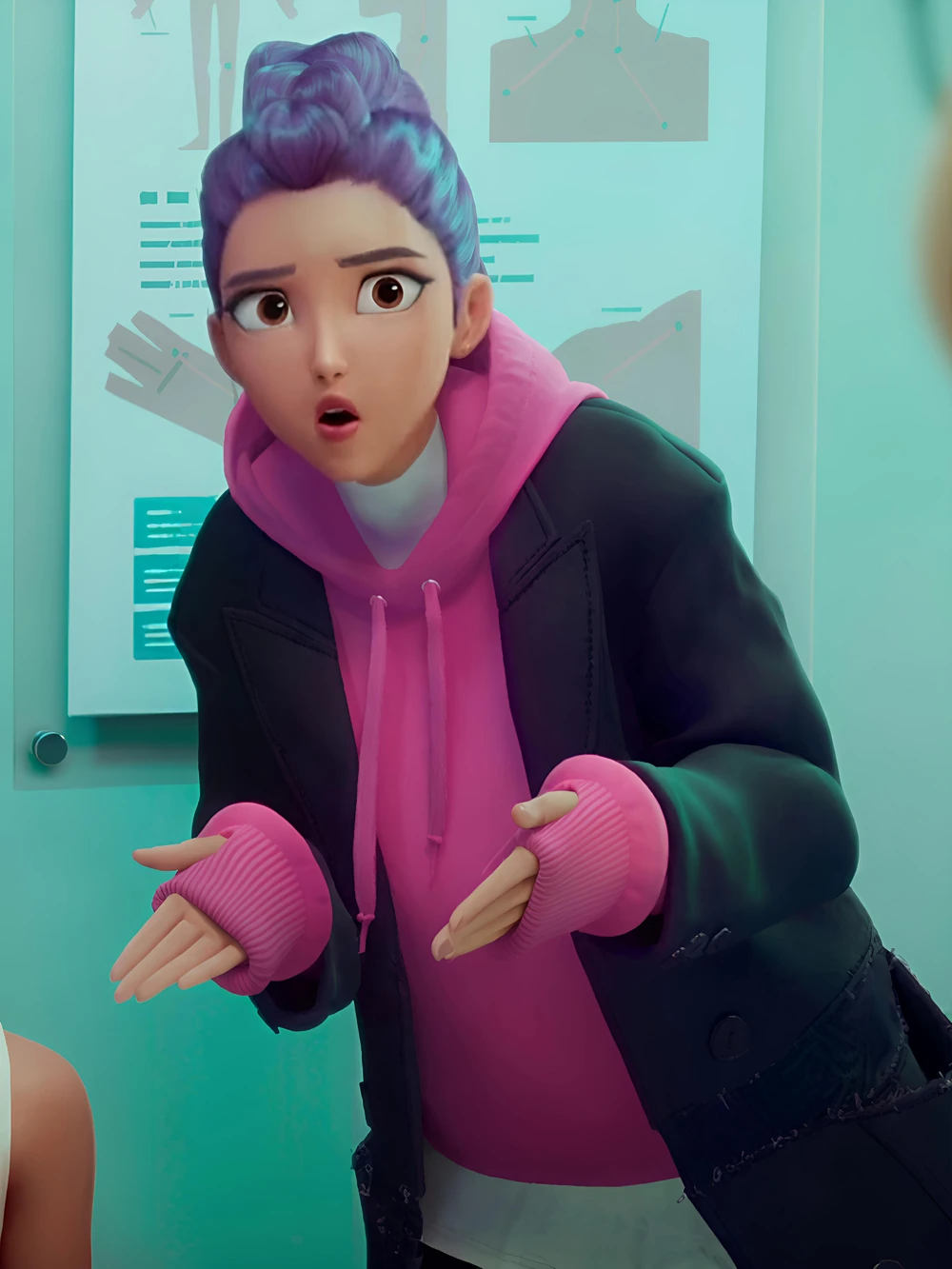
Mira and Zooey have their own inner-demons (don’t we all?) and together they’re a trio of liars who lie to themselves and each other. When asked about their newest track Golden they say ‘it’s about us’. and how they’re breaking free from the pressures they used to try and live up to. Well, it would be if they weren’t lying to each other. Rumi won’t go to the bath house because she’s covered in Demon patterns, Zooey is a massive people pleaser and Mira uses her aggression to guard her desperate need to be with a family that loves her for who she is. Rumi believes that if they manage to sing their way to the golden Honmoon (see the wiki) her problems will be over.
Spoiler: She’s wrong about that. They’re all wrong.

These character flaws make an excellent story. The reason everybody chokes up when they start singing This Is What It Sounds Like is not just because it’s a great song. We choke up because they’ve finally overcome the battles within, and the message means something to us, too. Flawed characters are highly relatable.
‘So we’re not heroes, we’re still survivors.’
There is no ‘chosen-one’ trope. They have to be the best of what’s available.
Aside from Frodo Baggins and Luke Skywalker, the ‘chosen one’ trope can get quite boring, quick. Rather than one of the k-pop trio standing in front as the most special one, they have to pick up the broken glass and make what they can of the wreckage.
So we were cowards, so we were liars
So we’re not heroes, we’re still survivors— This Is What It Sounds Like
Ultimately, coming out with the truth was the biggest challenge for these characters. Not the demons, not the existential threat surrounding them, it’s about the importance of owning up to your mistakes, admitting you were wrong in your judgement, and revealing the pain, the shame and the insecurity you’ve been hiding in order to connect with those around you. They’re still not perfect, but that’s why it’s a great story.
In summary, this is what K-pop Demon Hunters teaches us about storytelling:
- Perfect characters aren’t interesting.
- Nobody likes a Mary Sue.
- If a character has nothing to lose, they have no motivation, and no reason for us to care.
- You can tell a positive story without it being soppy or predictable.
- Flaws can be what make characters vulnerable, giving them challenges to overcome in the story.

Leave a Reply